


取り組んでいる課題
神経芽腫は小児がんにおいて最も一般的な頭蓋外固形腫瘍です。新たに診断された神経芽腫症例の約50%が高リスク群に分類されます。治療法の進歩にもかかわらず、高リスク神経芽腫は依然として致命的であることが多いです。現在の治療法は、重度の副作用を伴う高用量化学療法に依存しており、その後の幹細胞移植や高額な追跡治療が必要となります。そのため、重度の副作用を軽減し、患者の生存率を向上させるための新しい治療アプローチが求められています。



神経芽腫は小児がんにおいて最も一般的な頭蓋外固形腫瘍です。新たに診断された神経芽腫症例の約50%が高リスク群に分類されます。治療法の進歩にもかかわらず、高リスク神経芽腫は依然として致命的であることが多いです。現在の治療法は、重度の副作用を伴う高用量化学療法に依存しており、その後の幹細胞移植や高額な追跡治療が必要となります。そのため、重度の副作用を軽減し、患者の生存率を向上させるための新しい治療アプローチが求められています。
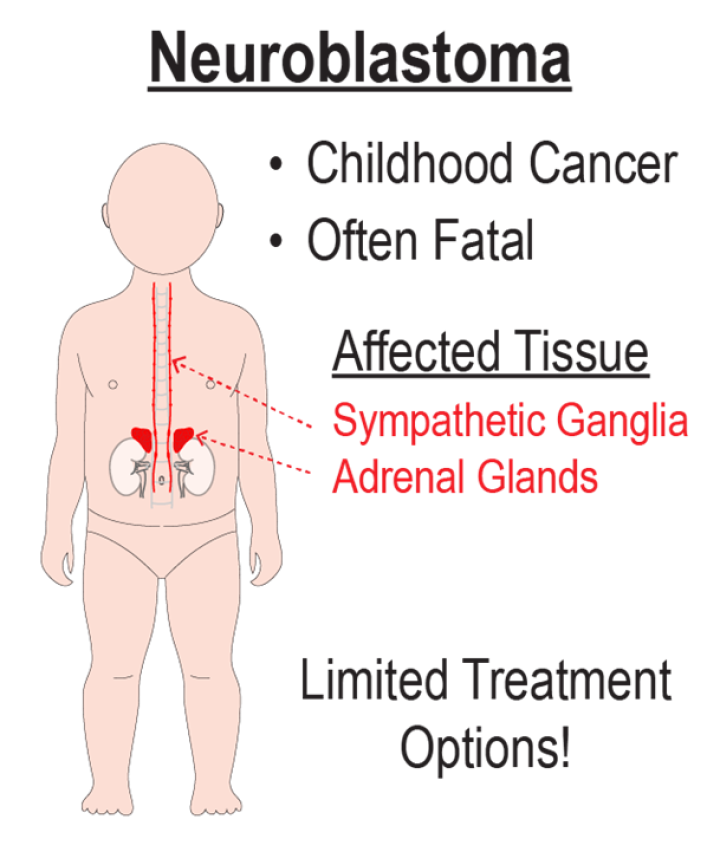
本研究では、高リスク神経芽腫を標的とする特異的なペプチド阻害剤の開発を目的とします。ペプチド阻害剤は、高い特異性、優れた有効性、低い免疫原性など、いくつかの利点を兼ね備えています。私たちは、ペプチド阻害剤開発のための潜在的な標的として、一連の遺伝子を特定しました。これらの遺伝子は、正常および高リスクの神経芽腫細胞の増殖に特異的に必要とされますが、他の細胞種ではそれほど必要とされないか、あるいは全く必要とされません。選択された遺伝子に対してペプチドタイリングスクリーニングを行い、神経芽腫の増殖を停止させる高い効果と特異性を持つ阻害ペプチドを同定します。提案するペプチド阻害剤は、細胞型特異的な脆弱性を利用しているため、副作用が最小限に抑えられると予想しています。そのため、高リスク神経芽腫の治療に適していると考えています。