iHAT: Iron-catalyzed Hydrogen Atom Transfer from H₂
Problem
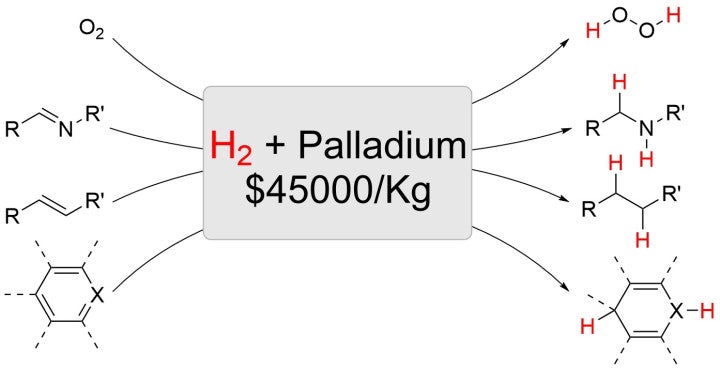
The hydrogen atom is ubiquitous in countless compounds essential to life and modern society. From the simplest molecules, such as water (H₂O), to complex ones such as pharmaceuticals and proteins, all contain hydrogen atoms in their structure. Industrially, these hydrogen atoms are most frequently derived from molecular hydrogen (H₂), which is inexpensive and widely available. However, the current method for producing hydrogen atoms from H₂ requires precious metal catalysts such as palladium and rhodium (Figure 1), which are costly, require energy-intensive purification methods and are associated with geopolitical instability.
Figure 1. Current method.
Solution
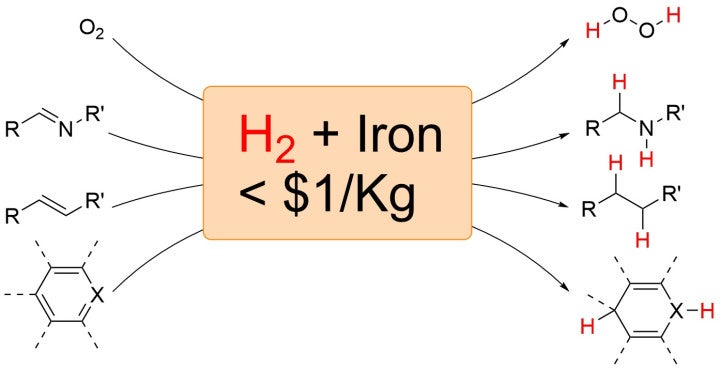
Our solution to this problem is the use of iron as a cheap, abundant and globally accessible catalyst. We have designed a catalytic system that enables the controlled generation and transfer of hydrogen atoms from H₂ for the synthesis of a variety of molecules, ranging from H₂O₂ to pharmaceuticals (Figure 2). By replacing precious metals with iron, our technology aims to enhance the sustainability, affordability, and resilience of hydrogen-dependent chemical manufacturing across multiple industries.