

Fibroblast-to-Cardiomyocyte Reprogramming with Novel Gene Regulators

Problem

Heart failure is among the most prevalent and life-threatening chronic diseases, affecting millions of individuals worldwide. Stem cell-based therapies offer a promising avenue for treating heart failure, potentially overcoming key limitations of heart transplantation, such as the scarcity of donor organs and complications from immunosuppressive treatments. 

However, there are significant hurdles to the clinical use of stem cell-derived cardiomyocytes: (1) the resulting cells often exhibit inadequate health and maturity, and (2) the differentiation process is typically slow, requiring several weeks. Our objective is to develop the world’s most efficient and rapid protocol for generating mature cardiomyocytes (CMs) from human stem cells. 

(Image on the left: Cardiac remuscularization strategy integrating novel cell programming with OIST-identified factors.)
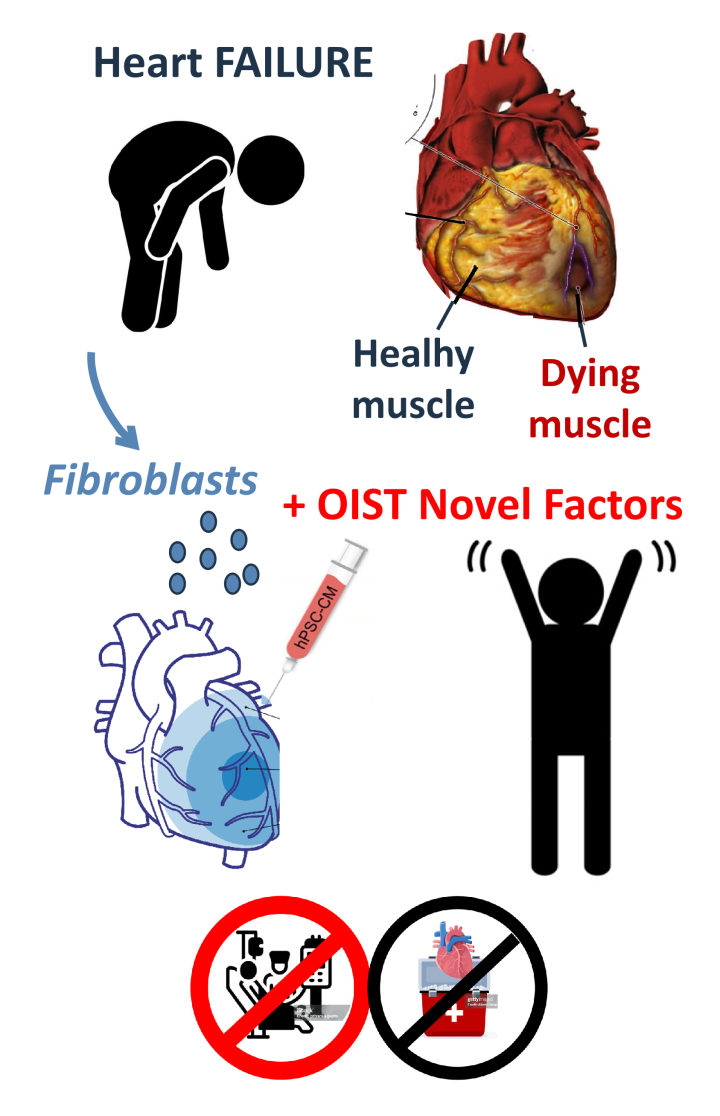
POC project (86-Taoufiq): Cardiac remuscularization strategy

Solution

In nuclear deep ultra-definition (UD) proteomics, we identified novel cardiac-specific transcriptional regulator (TR) combinations that, when delivered via lentivirus into hiPSCs, significantly accelerate cardiac differentiation and iCM maturation. We call this approach transcriptional regulator matching (TRM), which boosts cardiomyocyte-specific protein expression by over 500% in under 20 days.

In 2024 (POC Seed Phase), we patented the use of these TRs in human pluripotent cells (iPSCs, ESCs, MSCs, AFSCs, VSELs, ADSCs). However, others could apply them for direct transdifferentiation, which may fall outside current patent protection. Therefore, in this project phase, we will generate transdifferentiation data using human fibroblasts—especially using safer vectors like Sendai virus (SeV)—to broaden our patent and strengthen our position. 

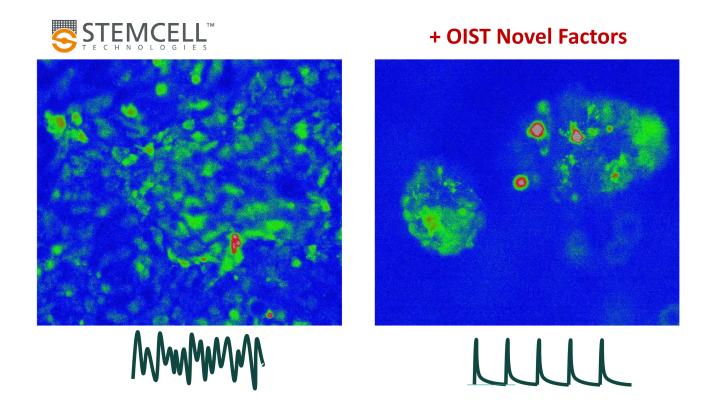
(Image on the right: Calcium transients in cardiomyocytes generated using a commercial stem cell differentiation kit versus OIST Novel Factors. At day 20, cells differentiated with the OIST protocol exhibit organized structure and synchronous beating at ~1 Hz, while those from the commercial kit display disorganized, asynchronous contractions.)

POC project (86-Taoufiq): Calcium transients in cardiomyocytes