




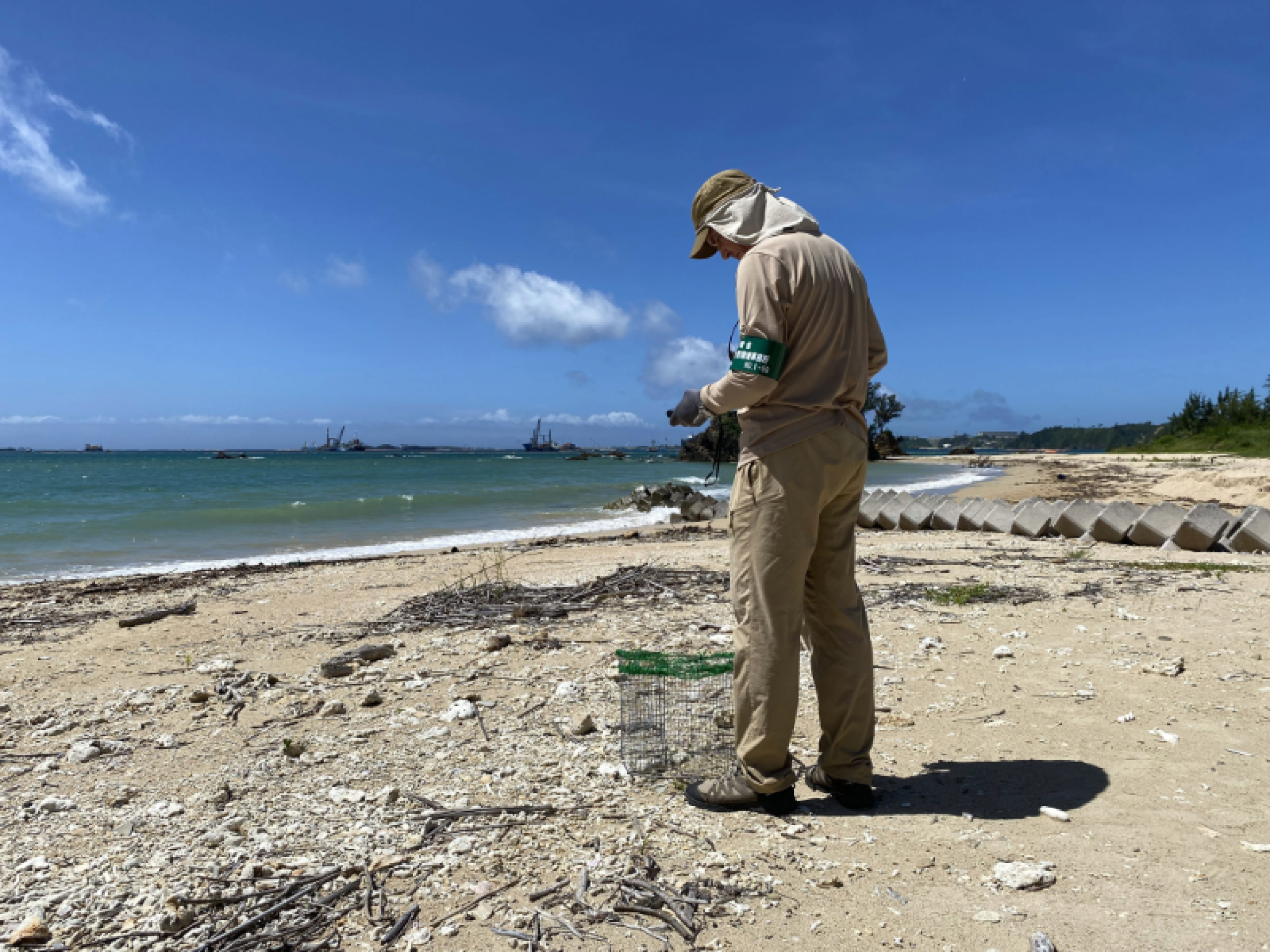
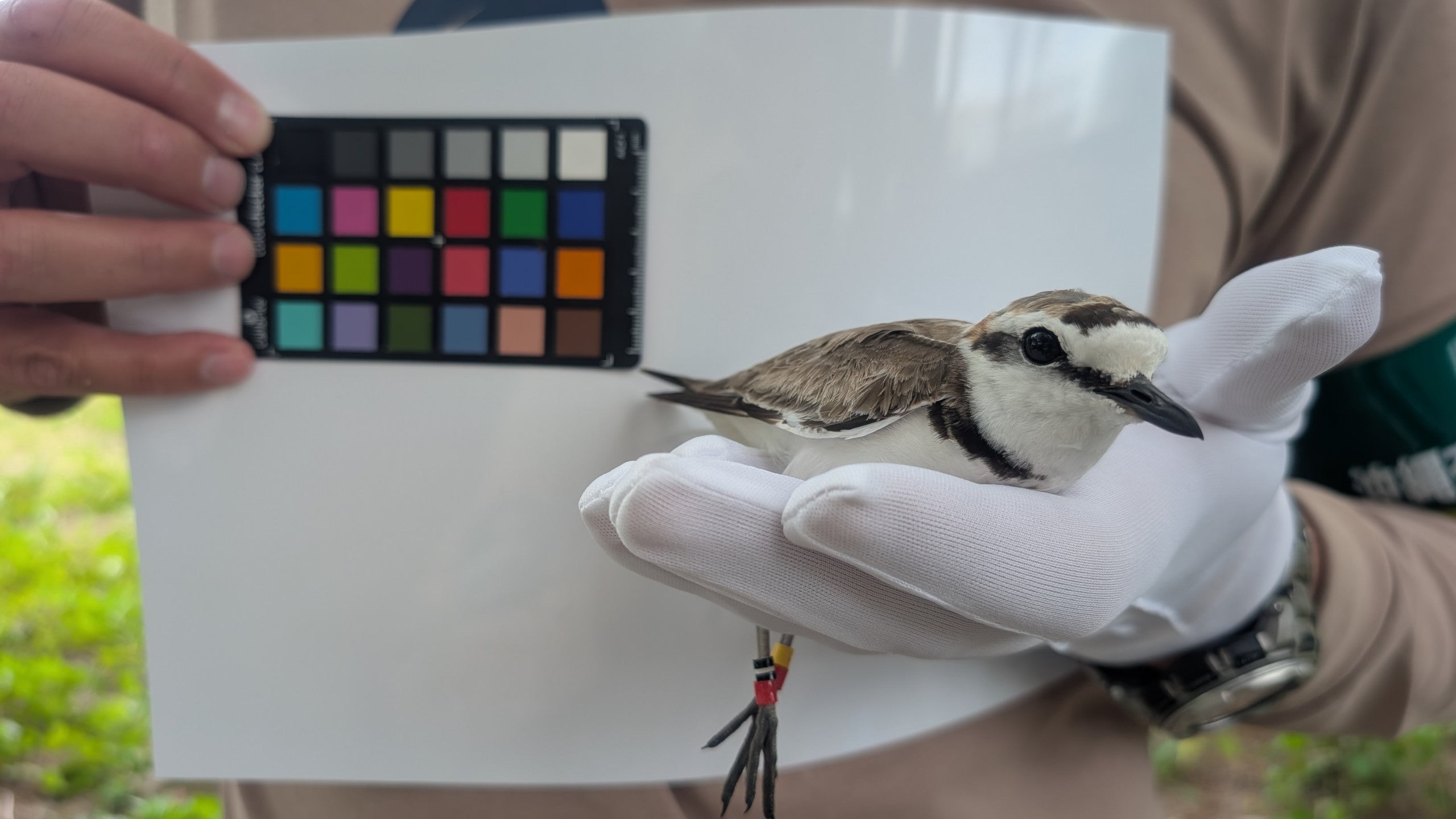
During tagging, Iakushev also takes blood samples, enabling genetic mapping of the population too. “We know these birds don’t migrate,” says Iakushev. “So who can say if they are really the same species as Kentish plover found in Europe, other parts of Asia, or even just across Japan?” Colleagues within the unit are now working on mapping the Okinawan Kentish plover genome, to provide an answer this question. If it is a separate species, it will become even more important to protect this bird’s habitat.
From icy tundra to tropical beaches
What makes Iakushev so passionate about this work?
“I’ve always been fascinated by birds,” he says simply. At age four, in the pine forests surrounding his home in rural Russia, he first witnessed a family of owls. He recalls, “It felt almost like a religious experience. They were magnificent.”
Developing his expertise on birds, he majored in biology, with a focus on zoology, and ornithology (the study of birds) in particular. After meeting some conservationists working with wading bird species, he moved to remote, easternmost Russia, acting as field team leader on a project to protect the endangered spoon-billed sandpiper. When the project ended in 2022, he moved to OIST.
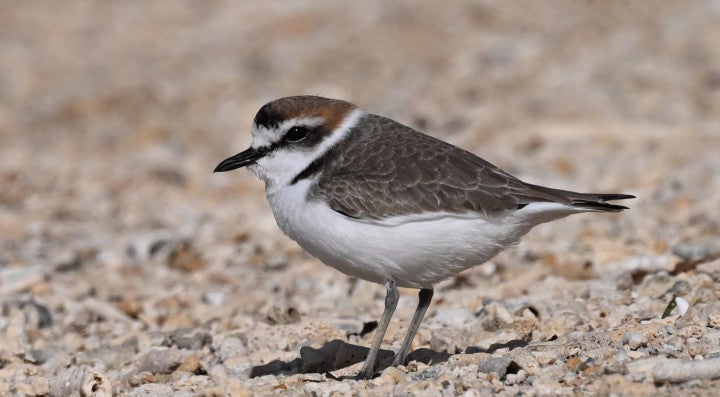
“I encountered a brood of Kentish plover in the spring of 2023, walking on one of the beaches,” he says. After researching these birds further, he agreed with Professor Fyodor Kondrashov, head of the Evolutionary and Synthetic Biology Unit, that the Kentish plovers were worth further study.
“We had long wanted to investigate what happens to a once-abundant species whose population is in sharp decline, and the Kentish plover is the ideal candidate for this purpose,” explains Iakushev. “It is relatively easy to locate, observe, and capture, and also serves as a model species for many evolutionary studies, making it possible to compare our own findings with existing data.”
While the species has wide global distribution, Iakushev speculates that in nearly all regions, local populations may likely be in decline. Despite its name, the Kentish plover ceased breeding in Kent, England, long ago.
Iakushev adds, “The Kentish plover seems to be following the same path as many other shorebirds that were once considered abundant but rapidly became threatened. This is precisely why it is crucial to begin conservation efforts for such species before their numbers drop to critical levels.”
Invasive species, impending development and increasing footfall
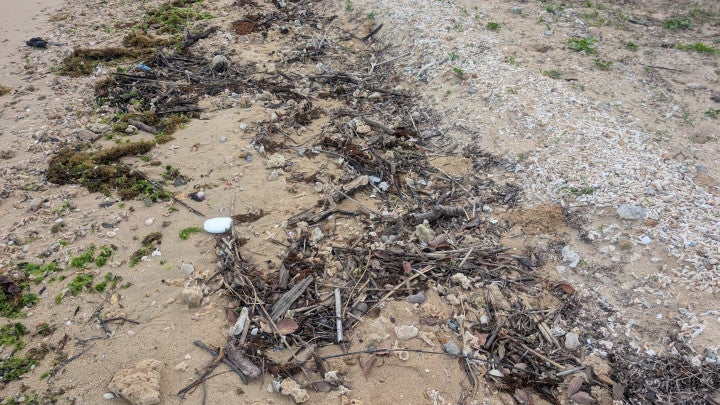
Since 2023, he’s identified several key threats to plover populations. Firstly, habitat loss. A combination of rising sea levels, human construction, such as sea defenses, and the creep of invasive vegetation has caused significant changes to Okinawa shorelines in recent years. Suitable habitats for nesting are shrinking.
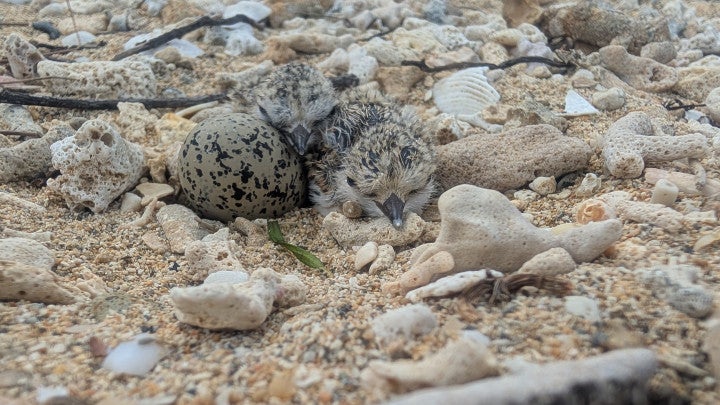
Even in spots where the scenery still suits Kentish plovers, other threats avail. With tourist numbers skyrocketing over the past decade, beaches are far more frequently visited. This comes with a number of threats, such as trampling from human feet, or canine companions feasting on easy-to-access eggs. If adult birds are scared away from incubating the nests, eggs might dry out and stop developing in the harsh beach temperatures. Obviously, tourism is vital for Okinawa’s economy, so shutting down all the beaches during breeding season isn’t a feasible solution. So what can be done?
“As tourism increases on the island, it’s important to maintain refugia for these vulnerable birds,” says Iakushev. He’s now seeking help from local communities to expand monitoring efforts. “We don’t need to cordon off every beach on Okinawa Hontō. But we should be protecting the areas that are most vital for the island’s biodiversity. And the more evidence we can collect, the more likely it is we can effectively protect Okinawa’s vital natural habitats and vulnerable species.”
Looking forward, he hopes to work with local governments and community groups to contribute to policy development and conservation of the most important sites for Kentish plover nesting. “This can have additional benefits for the wider ecosystem too,” he says. Little terns are known to nest near the plovers on Onna beach, acting as just one example of how other species might benefit from such protections.
If you’d like to support Kentish plover monitoring, please contact Nikolai Iakushev.
Brief Biography
Nikolai Iakushev is a Staff Scientist within OIST’s Evolutionary and Synthetic Biology Unit. His work focuses on the study and protection of migratory bird species including the study of genomic patterns of rare and endangered species. Prior to OIST, he spent 10 years as field team leader for spoon-billed sandpiper conservation in Chukotka, Russia.


