Design of E.coli strains able to efficiently degrade polyfluorinated compounds
Problem
Polyfluoroalkyl substances (PFAS) is a group of chemicals characterized by numerous carbon-fluorine bonds and fluorine atoms, which is the strongest bond known to organic chemistry. These bonds equip PFAS molecules with industrially sought-after characteristics resulting in their widespread use as surfactants, solvents, pesticides and much more.
Unfortunately, the massive industrial implementation comes along with a heavy toll: the strong bonds make the chemicals virtually not degradable, resulting in global PFAS contamination. To illustrate, traces of PFAS have been found in the humanly untouched regions of Antarctica. Additionally, PFAS come along with numerous health risks, including but not limited to increased cancer risk and child development impairment. Unfortunately, the current physical and chemical degradation methods are costly and not applicable on larger scales, underlining the need for alternative and versatile degradation methods to solve this global health crisis.
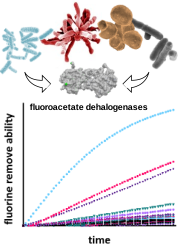
Figure 1. Fluoroacetate dehalogenase are present in different organisms and show a wide range of activity to remove fluor atoms from small molecules.
Solution
In the search for an appropriate degradation methods biological degradation has strikingly been ignored, even though enzymes (namely fluoroacetate dehalogenase) are available in nature that are able to remove the fluorine atom a small variety of fluorinated compounds with one fluorine.
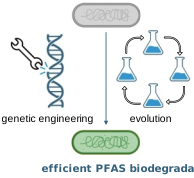
In this project we aim to design microbes to degrade PFAS that remove the fluorine and use the carbon for growth. In detail, we are going to utilize stateof- the-art genetic and metabolic engineering approaches to obtain a basal fluorine removal ability by expressing the mentioned enzymes. Next, cells will be exposed to evolutionary pressure by growing them continuously in PFAS. Eventually mutations will arise that allow cells to remove fluorine atoms more efficiently. Identifying, reintroducing, and combining those mutations will not only allow us to understand microbial PFAS degradation but additionally result in microbes able to degrade PFAS.
Figure 2. Engineering approach to design microbes for PFAS biodegradation.