

Unlocking microbial PFAS-degradation with evolutionary approaches

Problem

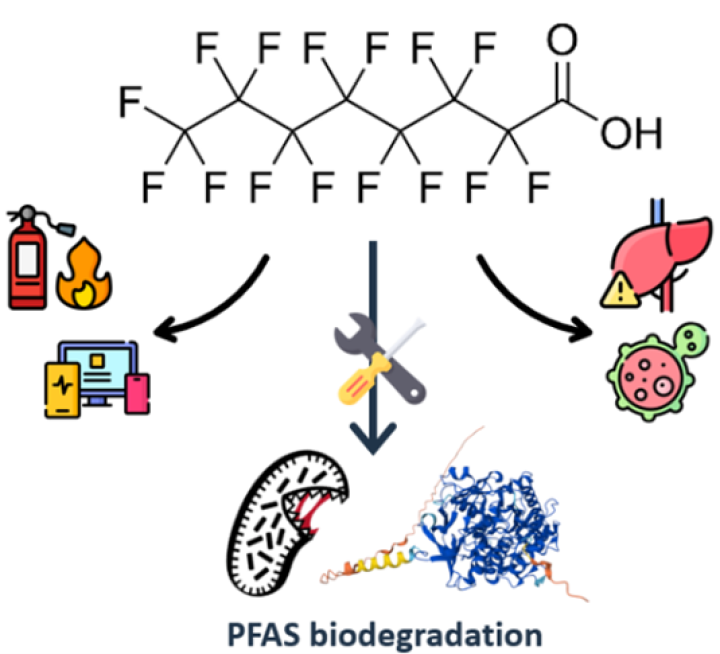
PFAS, per- and polyfluoroalkyl substances, are a large group of chemicals characterized by numerous carbon-fluorine bonds, which is the strongest bond known to organic chemistry. These equip PFAS with industrially sought-after attributes, leading to their widespread industrial use, such as in the production of fire fighting foam and electronics.

Unfortunately, the massive industrial advantages come with a heavy toll: PFAS are associated with numerous health risks, including but not limited to liver damage, potential cancer induction as well as child development impairment. Horrifyingly, the strong bonds make PFAS virtually undegradable, resulting in omnipresent contamination and a global health crisis. To illustrate, PFAS traces have even been found in the humanly untouched regions of Antarctica.

Unfortunately, the currently available physical and chemical degradation methods are costly and unapplicable on larger scales, underlining the need for alternative and versatile degradation methods.
POC project (78 - Laurino): Figure 1
Figure 1. Global PFAS crisis. PFAS are heavily used in industry but associated with numerous health risks. We aim to solve the current lack of applicable degradation methods by developing a biodegradation method.

Solution

In the search for degradation methods biological approaches have strikingly been ignored, a shortcoming we are aiming to tackle.


We engineer biological systems twofold: First, we utilize the power of evolution, by continuously growing bacteria in PFAS. This will push them towards tolerating PFAS and activate their degradation potential. Second, we utilize state-of-the-art metabolic, genetic and protein engineering tools to obtain enzymes able to break down PFAS. Enzymes from different environments and organisms are tested for their PFAS degradation potential and promising ones are further engineered.


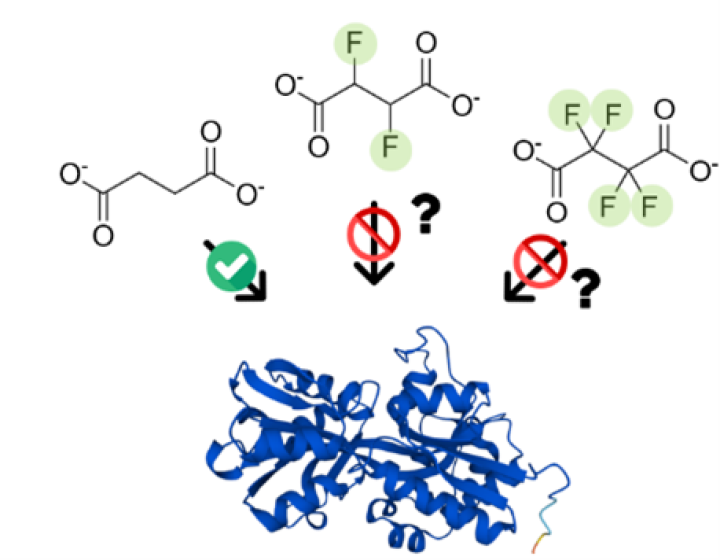
In addition, we seek to understand PFAS transport, a process that is the basis of every microbial PFAS degradation. To do this, we observe binding between transporter proteins and molecules with subsequently more and more carbonfluorine bonds. Identifying critical bonds will allow us to better understand this critical step in microbial PFAS degradation.

POC Project (78 - Laurino): Figure 2
Figure 2. Microbial PFAS transport. The binding of transporter to molecules with subsequently more and more carbon-fluoride bonds will be observed to understand the effect of fluorine on transport.