Cost-effective and low maintenance scale-up advanced wastewater treatment and nutrient recovery for swine farms

Problem

Wastewater derived from pig farming is characterized by its large volume and high concentrations of organic matter, phosphorus, and nitrogen. The conventional activated sludge process for treatment requires aeration, and excess sludge removal which accounts for 70% of the running cost. Pig farmers are looking for a wastewater treatment that is low-maintenance and reduces running costs. In addition, the nitrogen compound known as nitrate in wastewater can have negative impacts on human health and the environment if discharged without proper treatment. According to a survey, approximately 30% of farmers will struggle to meet the standard discharge regulation in the current treatment methods and are expected to face future difficulties.

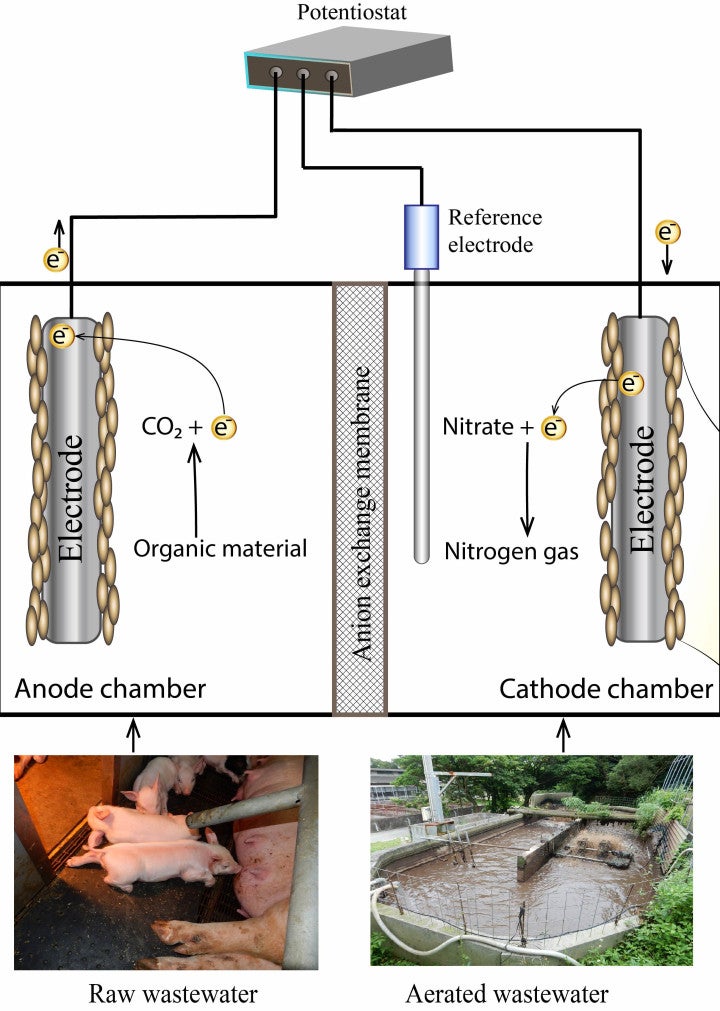
POC Project (53 - Mami): Figure 1

Solution

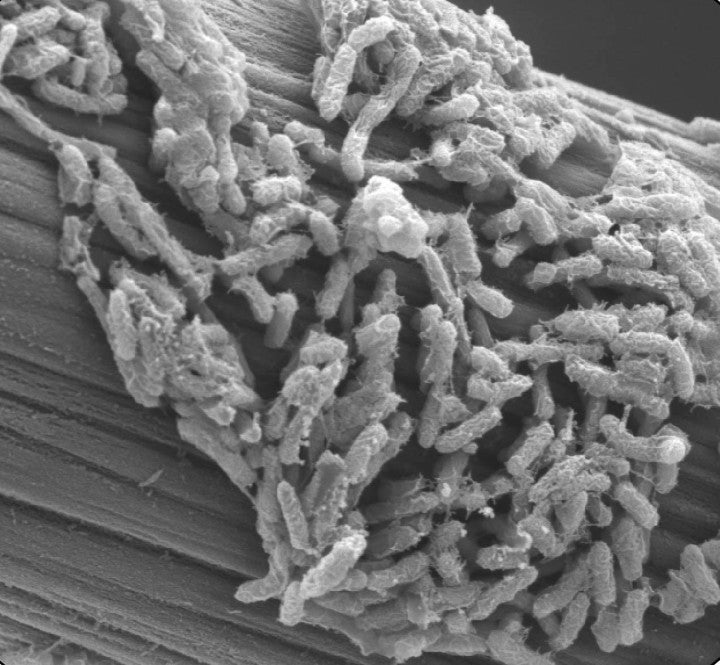
We have been developing a novel technology that simultaneously treats organic matter in raw wastewater and nitrate in aerated wastewater. The system consists of a two-tank configuration that utilizes anaerobic microorganisms capable of respiring through electrodes.

We conducted proof-of-concept demonstrations on a laboratory scale using 2- liter reactors, followed by operating a 65-liter system for three years at the Okinawa Prefecture Livestock Research Center’s wastewater facility*. The successful results led us to construct and test a larger 525-liter scale-up reactor in collaboration with NIKKO Company, Okinawa Environment Science Center, and Okinawa Prefecture Livestock Research Center aiming for commercialization.

Compared to conventional methods, it operates under anaerobic conditions and does not require an oxygen supply, resulting in lower electricity costs. Additionally, the system generates minimal excess sludge. Our system will be possible to achieve a 20-50% reduction in running costs compared to existing wastewater treatment alone. Furthermore, the nitrate levels can fall below the standard discharge limit, allowing farmers to comply with impending stricter regulatory requirements.

*Funded by Okinawa Prefecture Government (OPG).

POC project (53 - Mami): Figure 2