体内デバルキング手術のための フェムト秒レーザーアテレクトミーカテーテルの開発
取り組んでいる課題
アテレクトミーは、閉塞した血管を低侵襲技術で取り除く手術です。プラークの除 去には一般的に、研磨機械器具かナノ秒レーザーを使用しますが、どちらにも潜 在的なリスクがあります。鋭利な部分を持つ研磨器具は身体に損傷を与える可 能性があります。ナノ秒レーザーを用いた装置は使いやすいものの、組織の吸収 特性と潜在的に有害な紫外線の相互作用に依存しています。ナノ秒レーザーで 高度に石灰化したプラークを治療する場合には、非常に高い出力を必要とする ため熱によって近くの組織を損傷する可能性があり、特に困難となります。血管 を傷つけると、治療後にプラークが再発する可能性が高くなります。したがって、 血管疾患における石灰化プラークに対しては、より安全で効果的な治療法が求 められています。
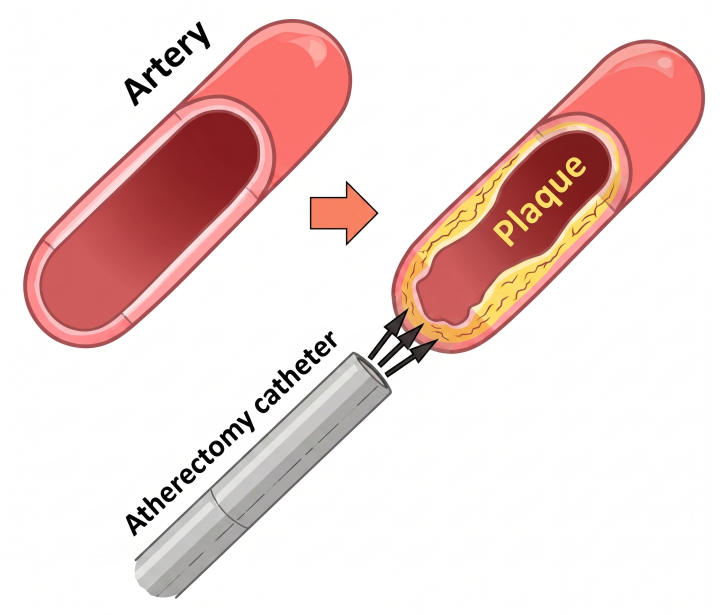
図1.アテレクトミーカテーテルを用いたプラーク除去
私たちの解決策
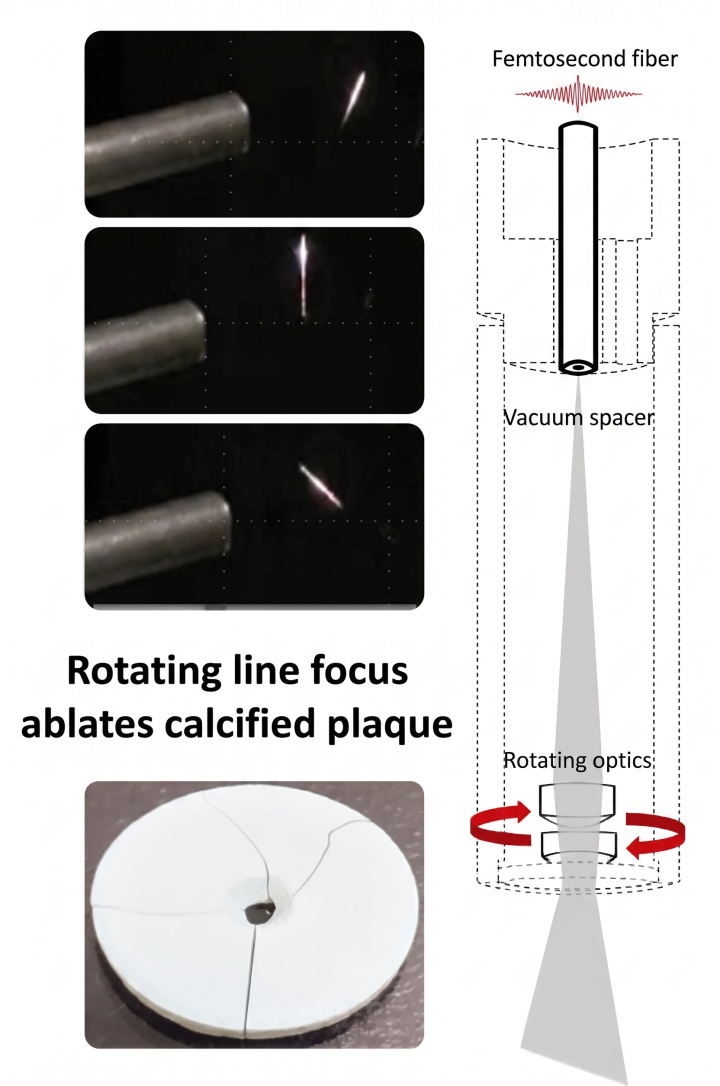
この問題に対する私たちのチームの解決策は、フェムト秒レーザーを基にした革新 的なアテレクトミーシステムを開発することです。このシステムはフェムト秒光アブレー ションの力を利用するもので、研磨機械部品や発熱性のナノ秒レーザーの必要 性がないため従来の方法に伴うリスクを大幅に軽減します。その結果、プラーク 除去性能が向上し、周辺組織への熱損傷が最小限に抑えられます。さらに私 たちの技術は、紫外線の代わりに近赤外線を使用しているため、生体親和性が 高く、潜在的な合併症を軽減することができます。全体的な結果として、炎症が 緩和され、患者の回復時間が短縮され、プラーク再発のリスクが低くなります。
図2.フェムトセカンドレーザーによるプラーク切除 (特許出願中)