Chemical regulation of CAR-T cells using riboswitches
Problem
We aim to address two independent market problems in CAR-T cell therapy for hematological and solid tumors.
CAR-T cell manufacturing: Constitutive CAR expression during manufacturing of CAR-T cells drives tonic signaling and premature exhaustion during ex-vivo expansion, while fratricide among T cells further reduces yield and triggers costly lot failures. Each failed autologous batch costs USD 400,000 and adds roughly one month to the vein-to-vein timeline.
Toxicities associated with cytokine armoring: Cytokine armoring of CAR-T cells by secreting various cytokines improves persistence and antitumor activity. However, constitutive cytokine expression can increase the risk of severe toxicities, including cytokine release syndrome (CRS).
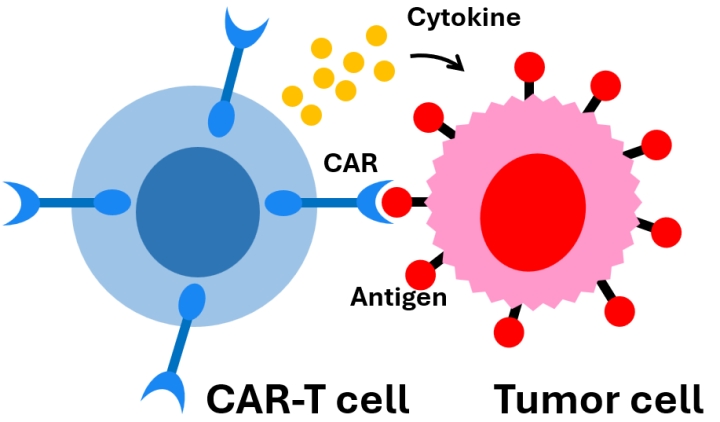
Figure 1. Schematic illustration of a CAR-T cell attacking a tumor cell displaying a tumor-specific antigen through recognition by CAR. Additionally, CAR-T cells can secrete a cytokine.
Solution
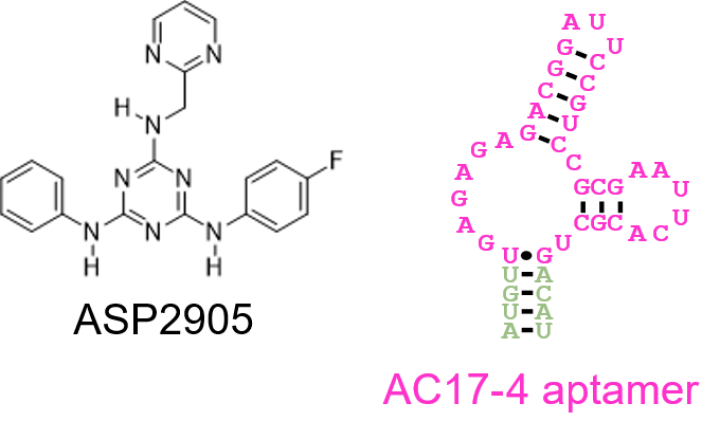
We aim to employ synthetic riboswitches to regulate transgene expression in CAR-T cells using small molecules. Robust temporal regulation of CAR-T genes is expected to address the existing manufacturing bottlenecks and clinical challenges associated with constitutive gene expression. Riboswitches are gene switches that can induce or suppress protein expression in mammalian cells by the addition of a small molecule. Our riboswitch technology is based on the new small molecule – RNA aptamer pairs that were discovered in our group (Figure 2), which exhibit excellent switch characteristics in human cells.
Figure 2. Small molecule (ASP2905) and the RNA aptamer (AC17-4) used to construct riboswitches that regulate gene expression.