Numerical weather prediction is performed using observation data from various sources such as weather satellites, weather stations, radiosondes, and buoys. Observations such as those from weather satellites do not provide ground-based measurements. Moreover, many of the observation sites are located far apart, and there are data missing in the gaps. Ground-based events can often influence wind systems, so it is essential to have more ground-based observations.
The typhoon boundary layer (close to its lowest part) needs to be well-sampled, and this necessitates an improvement in the density of ground-based data. The limitation to having dense and ground-based observations, in turn, causes inaccurate weather predictions. Since a “good” observation enables a better prediction, there is a need to improve groundbased observations.
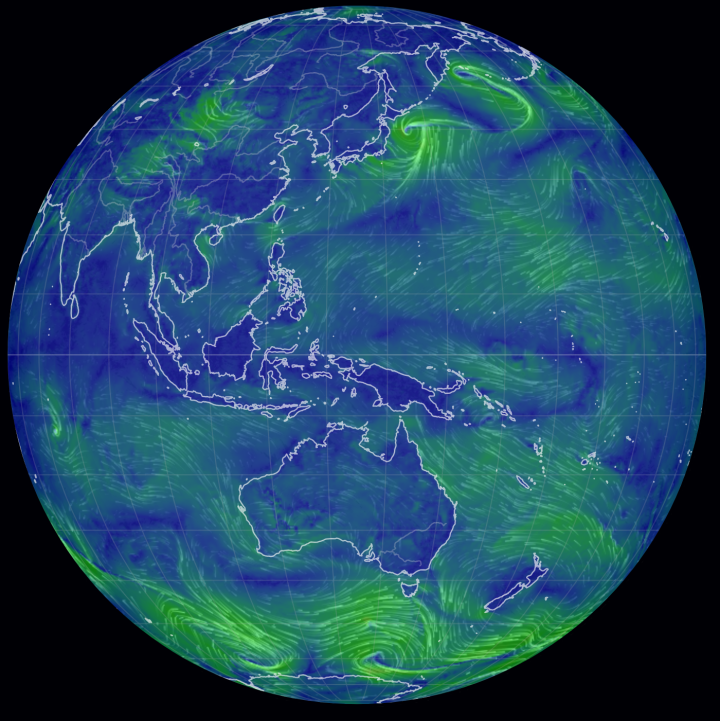
Figure 1: The wind pattern around the globe, obtained from a numerical weather prediction model. (source: https://earth.nullschool.net/)
Solution
This project aims to improve ground-based wind observations, and its main focus is to deliver a cheaper alternative to estimate ground-based wind data. Through this project, we aim to develop an affordable observation technique and an algorithm to estimate the speed and direction of wind. We strive to make observations more affordable and use this novel algorithm to deploy a dense covering of observations over the Earth’s surface.
Our approach will improve the observation density of wind data and thus help in identifying even very local variations of the wind patterns. In the future, we hope these data can be assimilated into the numerical weather prediction models for local weather forecasts.
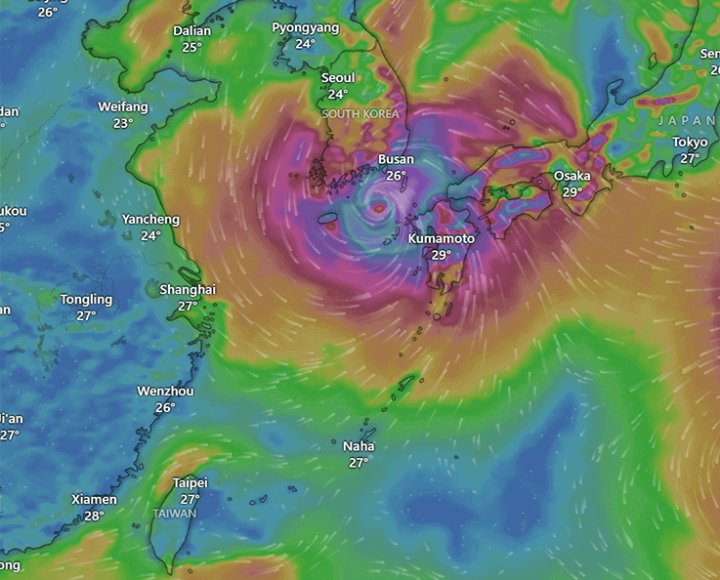
Figure 2: The wind pattern during typhoon Khanun on 4 August 2023. (source: Windy.com)