Applied research on aging and age-related disease markers
Problem
Aging causes a decline in various body functions, increasing the risk of poor health and difficulty in recovering from illness and injury. Basic aging researchers have long recognized that there are individual differences in the progression of biological aging, but an objective assessment index has not yet been established. A comprehensive and biochemical understanding of the aging process will provide important clues to the development of countermeasures for slowing its progression and rejuvenation. In addition, it is expected to lead to the elucidation of the mechanism of the occurrence of diseases such as frailty and dementia, for which the risk increases as aging progresses. Therefore, it is believed that the technology to easily know the changes in physiological functions associated with aging will contribute to the realization of a healthy and long-lived society.
Solution
I have been researching changes in human blood metabolism associated with aging and age-related diseases for more than 10 years in the G0 Cell Unit (currently Professor Emeritus Mitsuhiro Yanagida). Using metabolomics technology to comprehensively measure metabolites (small organic compounds with a molecular weight of 1,000 or less, such as sugars, amino acids, and nucleic acids) in body fluids such as blood, we have been able to identify metabolites that change with age and disease. These "biomarkers" may reflect physiological changes associated with aging or disease. Techniques for accurately measuring biomarkers are expected to be useful in research and development of individualized aging and pre-symptomatic interventions. As a Technology Pioneer Fellow, my goal is to conduct collaborative research with analytical and food companies interested in our technology, to promote technology transfer and licensing agreements, and to establish a company to support these activities.
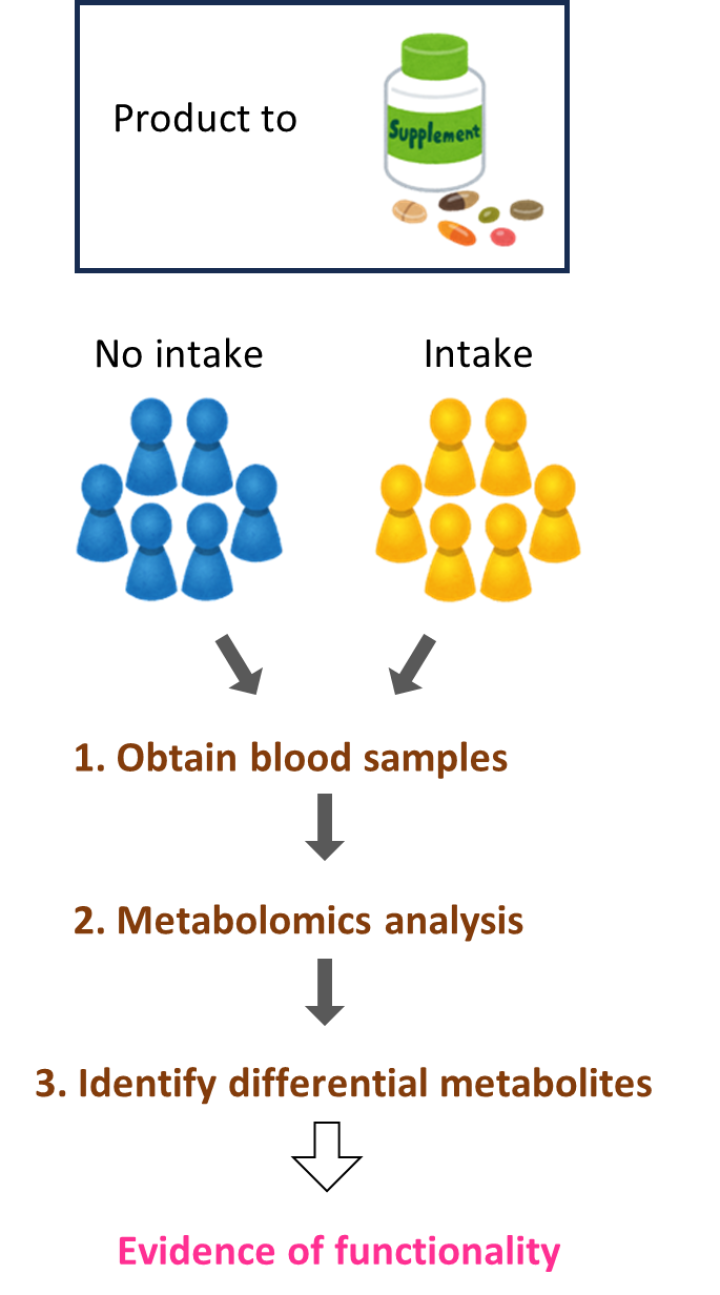
(Image on the right: An Experimental Model to Study the Effects of Functional Foods on biomarkers 1. Collect blood samples from groups with and without functional food intake. 2. Obtain comprehensive quantitative data on various metabolites such as muscle function, antioxidant activity, and waste products in the blood. 3. By comparing the data between groups, it is possible to see which biomarkers or types of metabolism the food affects.)