


Problem
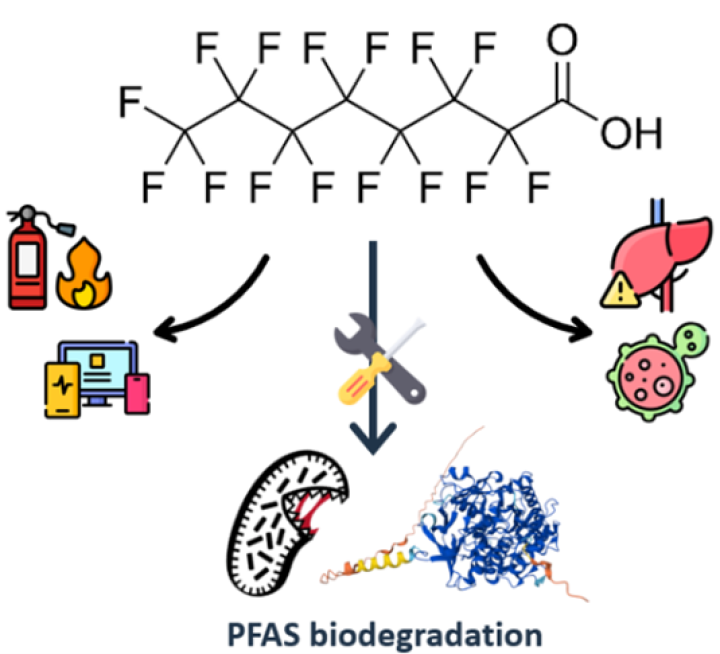
PFAS, per- and polyfluoroalkyl substances, are a large group of chemicals characterized by numerous carbon-fluorine bonds, which is the strongest bond known to organic chemistry. These equip PFAS with industrially sought-after attributes, leading to their widespread industrial use, such as in the production of fire fighting foam and electronics.
Unfortunately, the massive industrial advantages come with a heavy toll: PFAS are associated with numerous health risks, including but not limited to liver damage, potential cancer induction as well as child development impairment. Horrifyingly, the strong bonds make PFAS virtually undegradable, resulting in omnipresent contamination and a global health crisis. To illustrate, PFAS traces have even been found in the humanly untouched regions of Antarctica.
Unfortunately, the currently available physical and chemical degradation methods are costly and unapplicable on larger scales, underlining the need for alternative and versatile degradation methods.