
Toward Scalable and Sustainable Squid Aquaculture

Problem

Cephalopods represent a major and growing global food resource, yet while demand continues to increase, wild stocks are declining under fishing pressure and environmental change. However, despite decades of effort, scalable and economically viable cephalopod aquaculture has remained beyond reach.

Current cephalopod aquaculture approaches are not commercially feasible due to the combined burden of extremely expensive feeding regimes and intensive human labor. In particular, young cephalopods eat only live prey, which is costly to obtain, exhibits high variability in nutritional quality and availability, and introduces substantial biosecurity risks through parasites and microbial contamination.

In parallel, cephalopod care remains highly labor-intensive, requiring continuous monitoring, manual feeding, and frequent intervention. Together, these constraints prevent existing systems from scaling to production-relevant sizes and prices. 
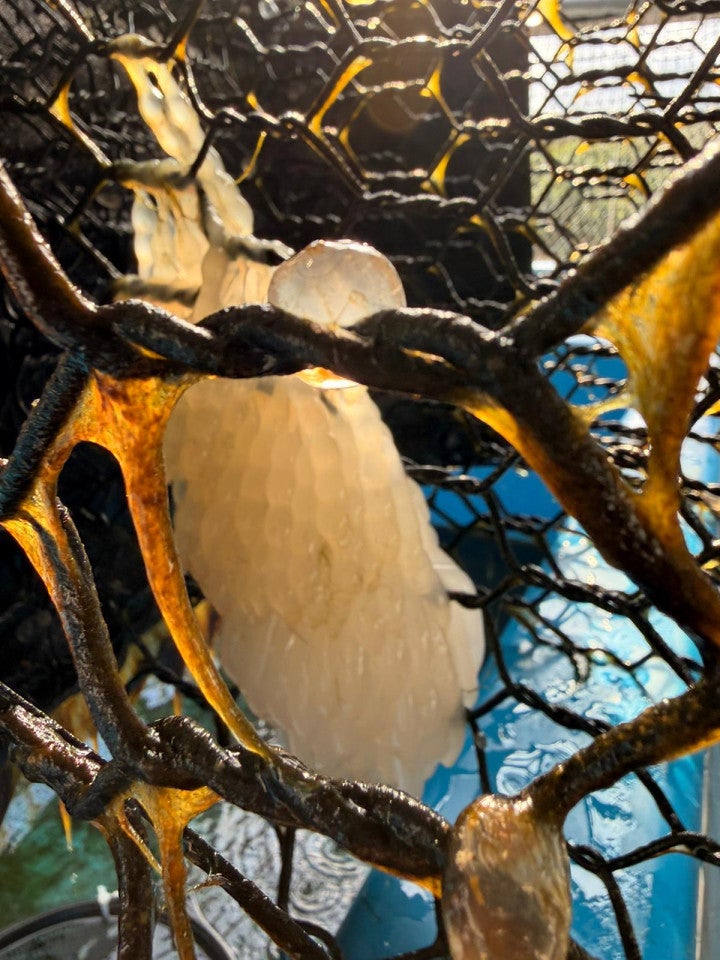
POC Project (88 - Macussi): Figure 1
Figure 1. Sepioteuthis lessoniana eggs laid at the OIST Marine Science Station

Solution

Our team has pioneered advanced cephalopod husbandry methods by translating insights from years of work in cephalopod behavior, neuroscience, and experimental husbandry into an industrially viable framework that rests on a three-pillar approach. The path to cost reduction and scale-up is not incremental optimization of existing methods, but first-principles redesign of the husbandry stack.

First, the development of artificial and formulated diets which dramatically reduce costs, stabilize nutritional input, and reduce pathogen introduction. Second, automation of feeding, waste removal, and routine husbandry tasks to lower labor costs while improving consistency and animal welfare. Third, the use of closed, recirculating aquaculture systems (RAS) with engineered filtration, disinfection, and quarantine protocols for biosecurity and environmental control.

Together, these elements are a first-principles redesign of the cephalopod husbandry stack, enabling a transition from an artisanal, research-grade approach to scalable, sustainable, and biosecure cephalopod aquaculture.

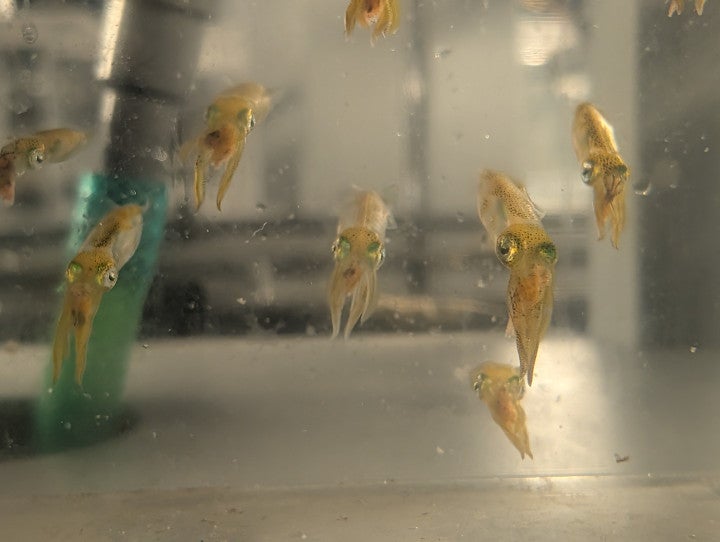
POC Project (88 - Macussi): Figure 2
Figure 2. Squid juveniles being transitioned to a non-live prey diet.