Application of T-Cell Adaptation Mechanisms to Tumor Microenvironment for Cancer Immunotherapy
Problem
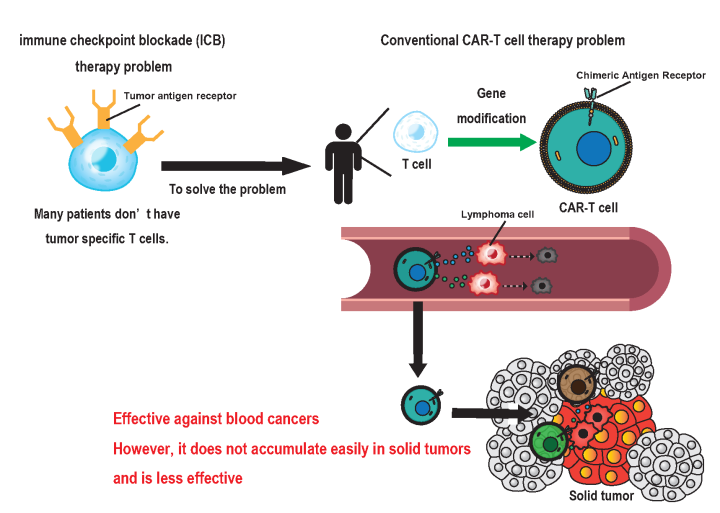
Cancer immunotherapy has been attracting attention in recent years as a treatment for cancer. Two of the most representative therapies are immune checkpoint blockade (ICB) and CAR-T cell therapy. ICB has been shown to be highly effective for those who respond to it, but because some people do not have cancer antigen-specific T cells that can recognize cancer antigens, its effectiveness is limited.
CAR-T cells were created to solve this problem. Although CAR-T cell therapy is highly effective against blood cancers, it is not effective against solid tumors. To address this problem, we are trying to apply our technology to CAR-T cells.
Figure 1: Problem of CAR-T cell therapy
Solution
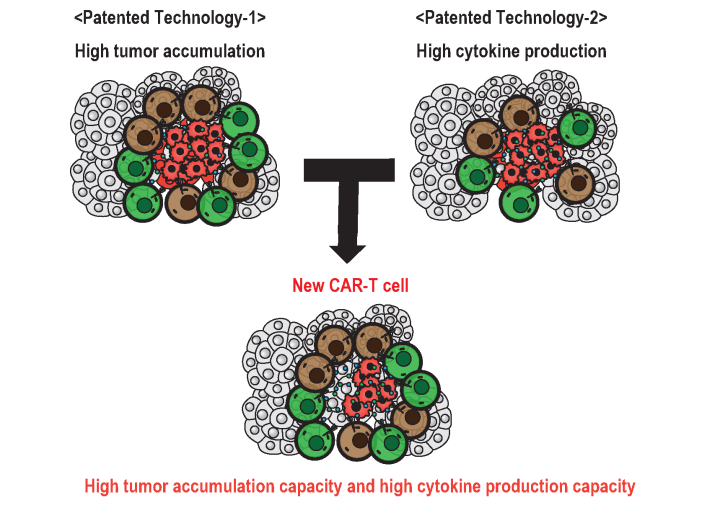
We have two technologies (patents pending) to enhance T-cell-based cancer immunotherapy. One is the use of an AP-1 transcription factor that promotes accumulation of both progenitor and terminal exhausted T cells (Tpex and Tex cells) in solid tumors, thereby enhancing their anti-tumor effects.
Another technology is based on membrane damage signaling that enhances the anti-tumor activity of intra-tumoral T cells. We have demonstrated that our technologies can enhance the anti-tumor responses of transgenic T cells expressing tumor-specific T cell receptors. Our goal is to improve the efficacy of CAR-T cell therapy against solid tumors through our patented technologies.
Figure 2: New CAR-T cell therapy using our technology (patents pending)