

A Novel Synthesized Peptide, PHDP5, as a Potential Treatment for Alzheimer’s Disease

Problem

As of 2024, over 55 million people are living with dementia worldwide. Alzheimer's disease (AD), the most common form of dementia, is characterized by progressive cognitive decline and memory loss. Unfortunately, there is no cure that treats AD, and existing medications provide only symptomatic relief with notable limitations.

Recent medications, which are antibody therapeutics targeting beta-amyloid, face limitations in delivery due to their large molecular weight (~145–150 kDa), which restricts their ability to efficiently cross the blood-brain barrier (BBB). As a result, high doses may be required to achieve therapeutic concentrations in the brain, increasing the risk of severe side effects such as brain swelling (edema), and limiting their overall clinical utility.

Therefore, developing effective drug delivery systems that enable efficient transport across the BBB is essential to enhance therapeutic efficacy in AD.
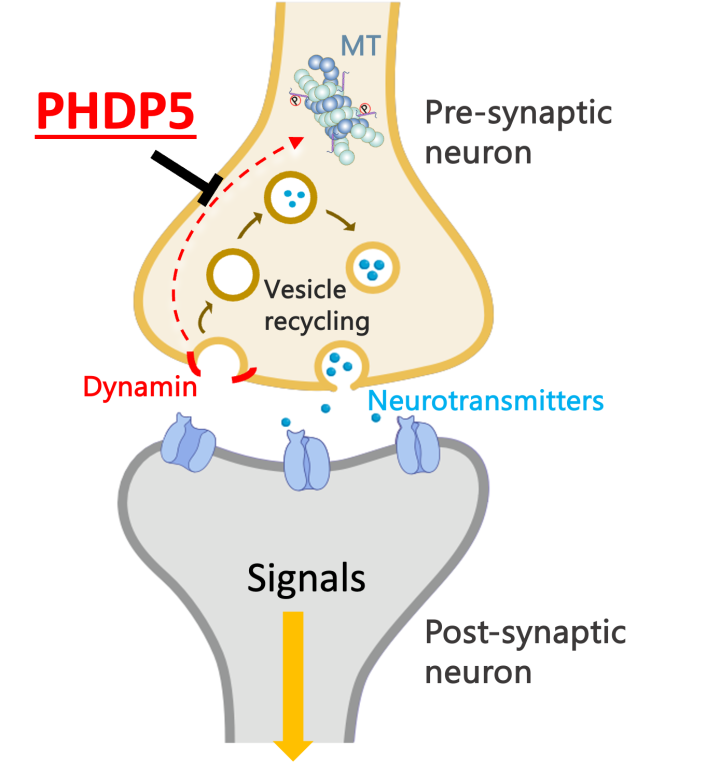
POC project (85-Chang):  PHDP5 can inhibit the MT-dynamin interaction
Figure 1. PHDP5 can inhibit the MT-dynamin interaction and significantly rescue endocytic impairments, as well as restore synaptic function, suggesting its potential value for the treatment of Alzheimer’s disease.

Solution

We are developing a novel synthesized peptide, PHDP5, as a therapeutic candidate for AD. PHDP5 inhibits the abnormal interaction between microtubules (MTs) and dynamin in presynapse, which represents one of the earliest and most critical features of AD, thereby restoring vesicle recycling and preserving presynaptic function.

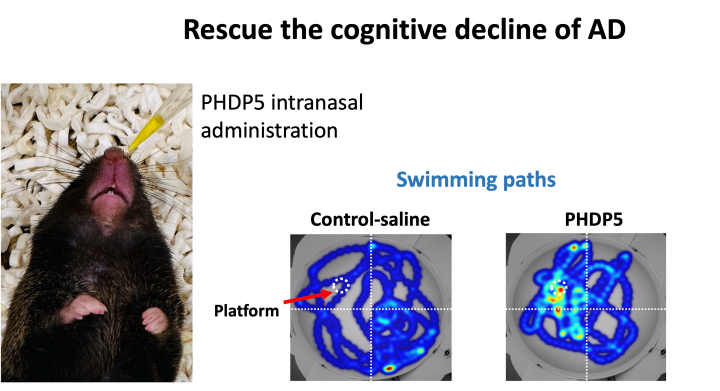
PHDP5, with its small molecular weight (~3 kDa), can bypass the blood-brain barrier (BBB) and reach the hippocampus. In addition, our findings showed PHDP5 improved spatial learning and memory deficits in both AD model mice, indicating its potential as a therapeutic agent for ameliorating cognitive impairments associated with AD.

As the next stage, we will elucidate the underlying in vivo mechanisms of PHDP5 on Tau pathology, which correlates more closely with the progression and severity of cognitive symptoms in AD. The long-term efficacy of PHDP5 on cognitive deficits in AD model mice will be evaluated, along with key preclinical profiles such as safety, efficacy, and pharmacokinetics.

POC project (85-Chang): 2. Intranasal administration of PHDP5 rescues learning and memory deficits in AD
Figure 2. Intranasal administration of PHDP5 rescues learning and memory deficits in AD model mice.