Timeline

- November 1, 2026: Symposium website is open.

- March 1, 2027: Abstract submission is open.

- May 30, 2027: Abstract submission is closed.

- July 1, 2027: Selected speakers and poster presenters are informed.

- July 1, 2027: Registration is open.
(*For those who need a visa application, please complete registration by the end of July)

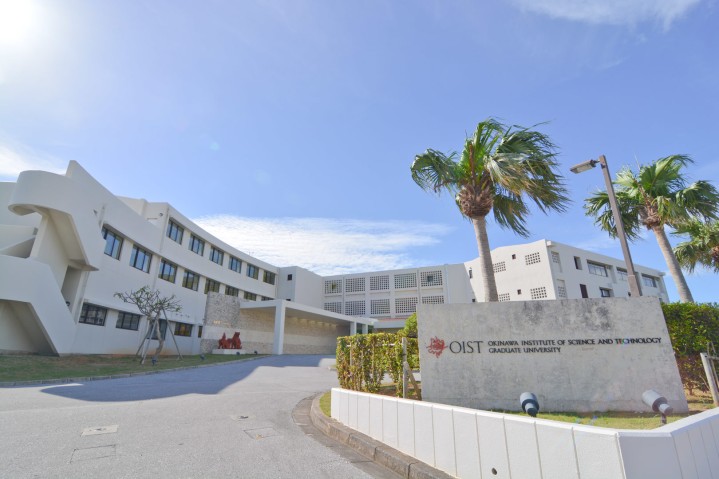
- November 9-12, 2027: The symposium is held at Okinawa Institute of Science and Technology (OIST).


Abstract submission is here

(opens on March 1).

Registration is here

(opens on July 1).

*The registration fee is currently estimated at JPY 60,000 and includes meals, accommodation, the banquet, and transportation between the accommodation and the symposium venue.

About the workshop

This symposium, “Major transitions in Life and Evolution: Crossing Boundaries in Living Systems,” will bring together researchers who study living systems at two fundamental boundaries: the boundary between life and nonlife, and the boundary between unicellular and multicellular organization. These two transitions are usually discussed in different communities, but they raise a common scientific question: how does a collection of molecules or cells acquire, maintain, lose, or transform the organizational properties that we call “living”? The workshop will create a focused venue in which experimental microbiology, synthetic and artificial cell research, evolutionary biology, biophysics, mathematical biology, dynamical-systems theory, and machine learning can be discussed within a shared conceptual framework.

The scientific scope is centered on transitions in the state of living systems rather than on a single organism, technique, or scale. Topics will include cellular death and revival, dormancy and slowed life, artificial cells and minimal self-maintaining systems, microbial collectives and biofilms, cell-to-cell heterogeneity, primitive differentiation, the emergence of division of labor, and the theoretical description of transitions between qualitatively distinct biological regimes. A central aim is to compare two kinds of “crossing”: crossing from life toward nonlife or from nonlife toward life and crossing from solitary unicellular life toward multicellular organization. By placing these themes side by side, the workshop will ask whether concepts such as robustness, memory, controllability, phase transition, division of labor, and self-maintenance can provide general principles that apply across major biological transitions.


Invited Speakers

- Jian-Geng Chiou (Academia Sinica, Taiwan)


- Miki Ebisuya (Dresden University of Technology, Germany)


- Liam Holt (New York University, USA)


- Christine Jacobs-Wagner (Stanford University, USA)


- Dianne K. Newman (California Institute of Technology, USA)


- Federico Rossi (University of Siena, Italy)


- Petra Schwille (Max Planck Institute, Germany)


- Shino Suzuki (RIKEN, Japan)


- Sine Lo Svenningsen (University of Copenhagen, Denmark)


- Shashi Thutupalli (National Centre for Biological Sciences, India)


- Shunichi Urayama (University of Tsukuba, Japan)


- *to be announced


Organizers

- Tetsuhiro Hatakeyama (Institute of Science Tokyo)

- Yusuke Himeoka (Kyoto University)

- Setsu Kato (Hiroshima University)

- Shunshi Kohyama (The University of Tokyo)

- Minoru Kurisu (Kyushu University)

- Hidenori Nakaoka (Tokushima University)

- Naomi Nakayama (OIST) 

- Arisa Oda (The University of Tokyo)

- Jun Takahashi (The University of Tokyo)

- Andrew S. Utada (University of Tsukuba)

- Fumiaki Yokoyama (OIST)


Supported by Japan Society for the Promotion of Science (JSPS) Grant-in-Aid for Transformative Research Areas (B)

- Life-Nonlife Transition

- Crossing the Border between Unicellular and Multicellular Organisms

Supported by Schmidt Science Polymaths


Coordinators

- Hitomi Shinzato (OIST)

- Academic Events Support Section (OIST)

Venue

- OIST Auditorium and Conference Center

Photo of OIST Auditorium


Accommodation

OIST seaside house or nearby hotel

CV-Access to Seaside House

Program

*Tentative program (subject to change)


Day 1

09:00–09:30 Transportation (Accommodation → Symposium Venue)

Session I

09:30–09:35 Opening Remarks

09:35–10:20 Invited Talk 1

10:20–10:45 Organizer Talk 1

10:45–11:00 Contributed Talk 1

11:00–11:20 Coffee Break

Session II

11:20–11:45 Organizer Talk 2

11:45–12:00 Contributed Talk 2

12:00–12:45 Invited Talk 2

12:45–13:45 Lunch

13:45–15:45 Poster Session I (odd-numbered posters)

Session III

15:45–16:30 Invited Talk 3

16:30–16:55 Organizer Talk 3

16:55–17:15 Coffee Break

Session IV

17:15–17:30 Contributed Talk 3

17:30–18:15 Invited Talk 4

18:45–20:45 Dinner

21:00 Transportation (Symposium Venue → Accommodation)

---

Day 2

09:00–09:30 Transportation (Accommodation → Symposium Venue)

Session V

09:30–10:15 Invited Talk 5

10:15–10:40 Organizer Talk 4

10:40–10:55 Contributed Talk 4

10:55–11:15 Coffee Break

Session VI

11:15–11:40 Organizer Talk 5

11:40–11:55 Contributed Talk 5

11:55–12:40 Invited Talk 6

12:40–13:40 Lunch

13:40–15:40 Poster Session II (even-numbered posters)

Session VII

15:40–16:25 Invited Talk 7

16:25–16:40 Contributed Talk 6

16:40–17:05 Organizer Talk 6

17:20–17:50 Transportation (Symposium Venue → Banquet)

18:00–20:00 Dinner (Banquet)

20:15 Transportation (Banquet → Accommodation)

---

Day 3

09:00–09:30 Transportation (Accommodation → Symposium Venue)

Session VIII

9:30–9:55 Organizer Talk 7

9:55–10:40 Invited Talk 8

10:40–10:55 Contributed Talk 7

10:55–11:15 Coffee Break

Session IX

11:15–12:00 Invited Talk 9

12:00–12:15 Contributed Talk 8

12:15–13:15 Lunch

13:15–14:35 OIST Campus Tour (Optional)

Session X

14:35–15:00 Organizer Talk 8

15:00–15:15 Contributed Talk 9

15:15–15:40 Organizer Talk 9

15:40–16:00 Coffee Break

16:00–16:15 Contributed Talk 10

16:15–17:00 Invited Talk 10

17:15 Transportation (Symposium Venue → Accommodation)

*Participants are requested to arrange their own dinner.

---

Day 4

09:00–09:30 Transportation (Accommodation → Symposium Venue)

Session XI

09:30–09:55 Organizer Talk 10

09:55–10:40 Invited Talk 11

10:40–11:00 Coffee Break

Session XII

11:00–11:25 Organizer Talk 11

11:25–12:10 Invited Talk 12

12:10–12:20 Closing Remarks

---

*Contributed talks will be selected from submitted abstracts. All talk durations include questions and discussion.


Contact

mtle.mild.2027@gmail.com

Code of Conduct

Purpose

To ensure that all participants have a clear understanding of the behavior that is expected of them.

Code of Conduct

We are committed to making our workshops (workshop(s) organized by OIST, hereinafter “our workshop(s)”) an inclusive space for sharing ideas and knowledge. We will not tolerate disrespectful communication, discrimination, harassment, or bullying in any form. As such, all participants attending our workshops are required to comply with this Code of Conduct. To provide all participants the opportunity to benefit from our workshops, we at OIST are dedicated to a positive, safe and harassment-free experience. Harassment in any form is specifically prohibited.

What is Harassment?

Harassment involves continued antisocial or unreasonable actions that violate a reasonable person’s personal rights and/or dignity and cause mental suffering, and thus worsen the person’s environment or make him/her anxious about participation. Behavior that is acceptable to one person may not be acceptable to another, so we ask that you use discretion to be sure that respect is communicated. Harassment intended in a joking manner nevertheless constitutes unacceptable behavior. Speech that is not welcomed or that is personally offensive, whether it is based on gender, age, sexual orientation, mental or physical disability, ethnicity, national origin, religion etc. will not be tolerated.

If you are being harassed, notice that someone else is being harassed, or have any other concerns, please bring this to the immediate attention of the organizers. If you wish to report an issue concerning the organizers, you can contact the Conference and Workshop Section directly and submit a confidential report by sending an email to workshop-codeofconduct@oist.jp or submitting a report through the ⁠webform.

All complaints will be taken seriously and responded to by the Dean of Research promptly. Confidentiality will be maintained to the extent that it does not compromise the rights of others. Individuals found in breach of this Code of Conduct will be dismissed from the workshop immediately. Retaliation for reporting harassment is also a violation of Code of Conduct, as is reporting an incident in bad faith.

Be Aware