iGEM 2025

                           a synthetic biology based pest management system

iGEM Okinawa is a unique collaboration between students from OIST and various universities across Okinawa. This is the first year we participated in iGEM, and we won a gold medal at the Grand Jamboree 2025 in Paris!

iGEM jamboree
iGem 2025 medal photo

Our Project

A Story of Mango and Thrips

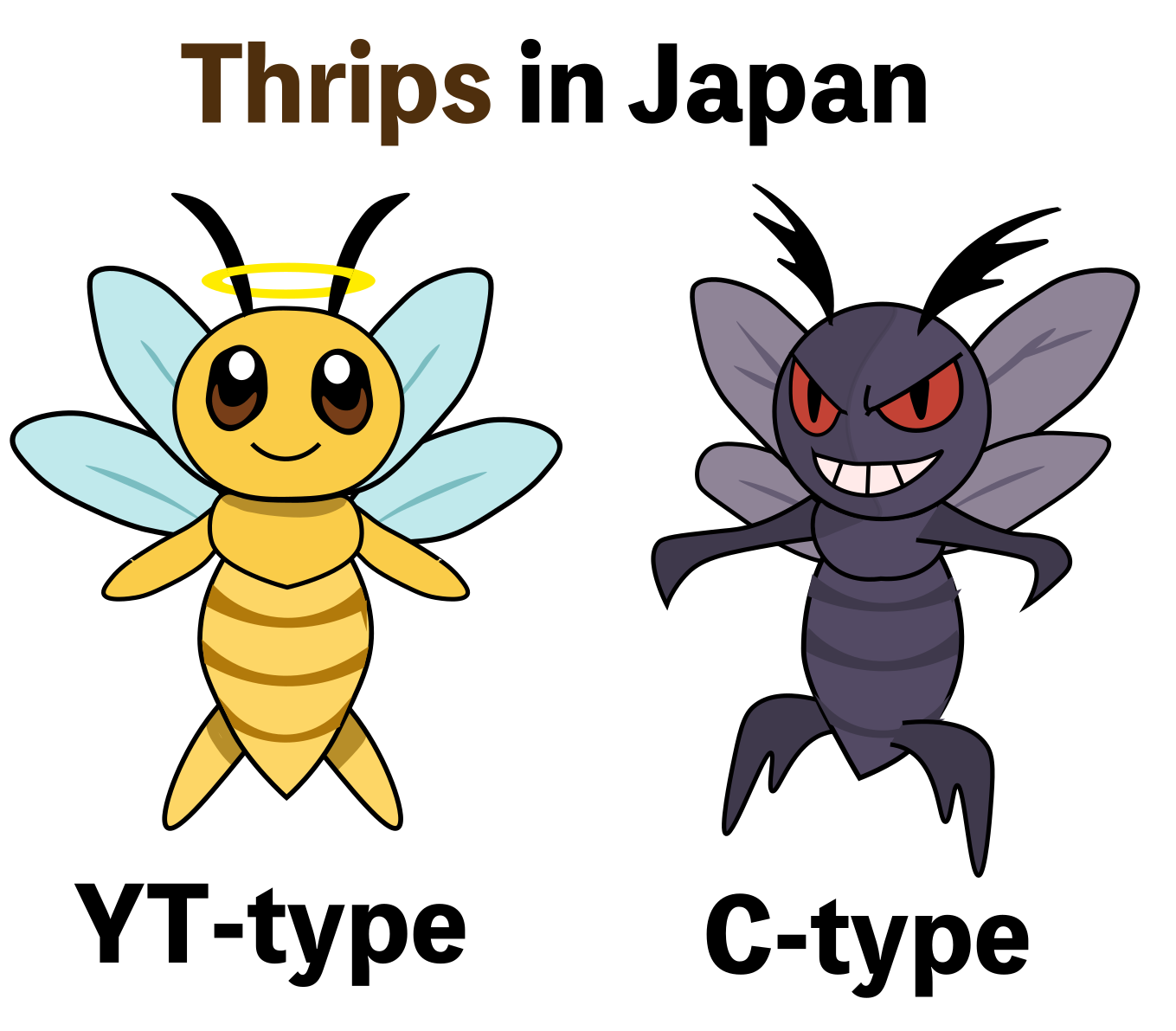
In Okinawa’s mango farms, farmers face a familiar but persistent challenge: thrips, tiny insects that appear early in mango growth. While some species are harmless (YT-type), others are invasive (C-type) and cause significant damage to the fruit.

Thrips in Japan
Thrips story 2

Because these species are indistinguishable through the naked eye, farmers often resort to spraying chemical pesticides across the entire field as a preventive measure. This practice increases costs, labor, environmental impact, and risk of thrips becoming resistant to the pesticides.

By listening and consulting to local farmers, we realized that a more precise, environmental-friendly, and biology-based approach could make a real difference. We aim to develop smart solution using biology + engineering (syntetic biology) to solve this pest crisis in Okinawa.

iGEM thrips story 3

Our Solution

We are iGEM Okinawa, a student team from 3 higher education institutions in Okinawa, participating in an international competition aiming to solve real-world problems using synthetic biology. Inspired by the problem faced by mango farmers in Onna, we’re developing a smart, biology-based pest management system that helps farmers make informed, precise decisions.

We aim to:

  1. Monitor thrips activity by developing smart electrical device that reports thrips activity in real-time

  2. Diagnose species using a test kit to identify whether thrips are harmful or harmless

  3. Prevent damage using a synthetic biology-based method that targets only the invasive species

We will trial this system with thrips samples we collected from Okinawa mango farms as a proof-of-concept.

iGEM Thrips story 4

Why This Matters

  • Reduce pesticide use, saving farmers time and money

  • Protect the environment from overexposure to chemicals

  • Empower precision agriculture and food security

  • Scale globally for pest problems in other crops and regions

Our Activities

1. Identifying the problem: visiting a local mango farm in Onna-son

Our team visited a mango farm in Onna-son to speak directly with local farmers. We discussed various challenges they face, identified which mango varieties are targeted by thrips, learned about their current pest management strategies, and heard their expectations for future pest control solutions.

We used this information to develop a strategy for our thrips pest control system.

iGEM mango farm visit
iGEM mango field (young)

2. Development of a DNA-detecting Smart Trap model

Early detection and rapid countermeasures are essential for effectively eradicating pests, such as tea thrips. Okinawa, in particular, consists of numerous remote islands, requiring a system to prevent pests from entering or leaving at border points.

We are developing a "DNA-detecting smart trap" as an early detection solution applicable to various pests. This trap utilizes accurate and rapid detection technology based on methods validated by previous research. The smart trap is expected to provide three significant advantages:

Firstly, by changing its internal components, this trap can detect not only tea thrips but also a wide variety of other pests. This flexibility enables the early detection of newly introduced pests and invasive species.

Secondly, once installed, the trap automatically carries out all processes, from capturing pests to DNA analysis. Detection results are immediately sent to the installer through integrated communication devices, eliminating the need for frequent maintenance and significantly reducing the required manpower.

Finally, by deploying these traps extensively across the prefecture, it will become possible to identify critical points along pest migration routes, enabling targeted and efficient pest extermination.


iGEM Thrips trap 3D model
iGEM trap prototype

3. Thrip sample collection and DNA extraction for development of pest detection kit

We revisited the mango farm in Onna-son to collect thrip samples and extract their DNA. This process is a crucial step for developing and testing our LAMP-based DNA detection system—a rapid, accurate, and portable method for quickly identifying pest infestations in the field. We will perform molecular biology experiments (PCR) to determine which type of thrips (YT-type or C-type) we have collected.

Thrips sample collection
iGEM thrips collection zoom

Our Team

We are a team of students from three higher education institutions in Okinawa:

1. Okinawa National College of Technology (KOSEN)

2. Okinawa Institute of Science and Technology Graduate University (OIST)

3. University of the Ryukyus (Ryudai)

iGEM team photo

Team Members

Leader

Shun Ono (OIST)

Members

Bakhytzhan Akdavletov (OIST) 

Youjung Han (OIST)

Sora Nagahama (KOSEN)

Wahei Hagiwara (OIST)

Shintaro Kawatsuka (KOSEN)

Mai Ichioka (KOSEN)

Edith Conn (Ryudai)

Faezeh (Ryudai)

Kinjo Shion (KOSEN)

Junho Lee (OIST)

Yuuna Hitani (KOSEN)

Muhammad Hamzah (OIST)

Shinnosuke Agena (KOSEN) 

Hina Shinjo (OIST)


Mentor

Benjamin Heidt (OIST)

Shinya Ikematsu (KOSEN)

Ivana Kurecic (OIST)

Ulla von Ammon (Ryudai)