Development of flexible mechanoluminescent materials
Problem
Understanding how microscopic damages develop inside materials is essential for improving performance, safety and durability of products, vehicles, and infrastructure. However, these processes are often invisible and difficult to measure under real-world operating conditions. Without this information, engineers face challenges in identifying potential failures and optimizing material and product designs.
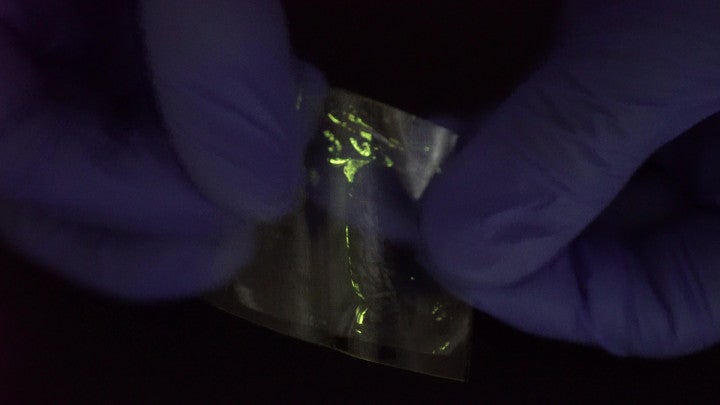
Figure 1. Mechanoluminescence films emit light when rubbing motion is applied to the outer film
Solution
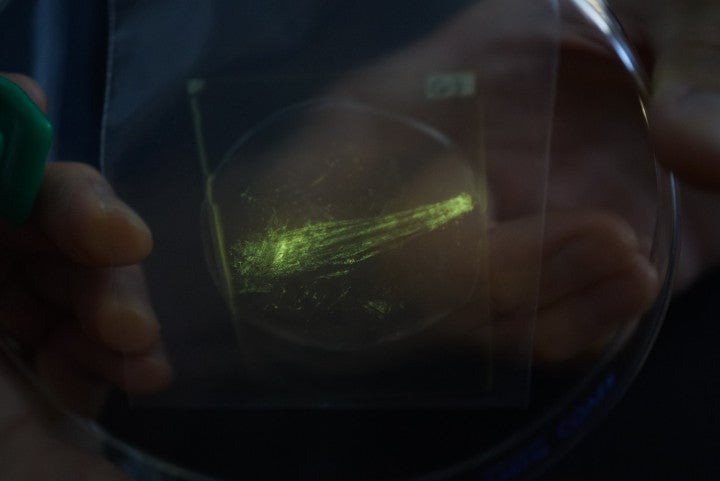
We are developing a method to visualize damage in real time using light-emitting materials. These materials, known as mechanoluminescent materials, emit light when subjected to mechanical forces such as friction, bending, twisting, or contact (Fig 1, Fig. 2). By incorporating these materials into specialized coatings, we aim to make otherwise invisible microscopic damage detectable during actual product testing. The emitted light provides information about where and when mechanical stress occurs, helping engineers identify weaknesses and improve product design.
We are also exploring infrared-emitting mechanoluminescent materials, which could enable the detection of damage inside non-transparent plastic components—something that is difficult to achieve with existing optical measurement techniques.
This technology has the potential to enable more accurate material testing and support the development of safer, stronger, and longer-lasting products.
Figure 2. Mechanoluminescence films emit light when bending and twisting motion is applied