There is a growing interest from consumers for alternative textiles made from rare, natural fibers. Okinawan traditional textiles, i.e., Bashofu, has been used to make garments such as kimono for centuries. However, the complexity of the hand-tie method to create yarn from fiber is leading to decline in bashofu products. In addition, the stiffness and fragility of the fiber does not allow for processing with conventional spinning machines. The traditional method of hand-tied Basho yarns creates knots that causes them to get caught in machine weaving, so it is currently very difficult to weave by machine.
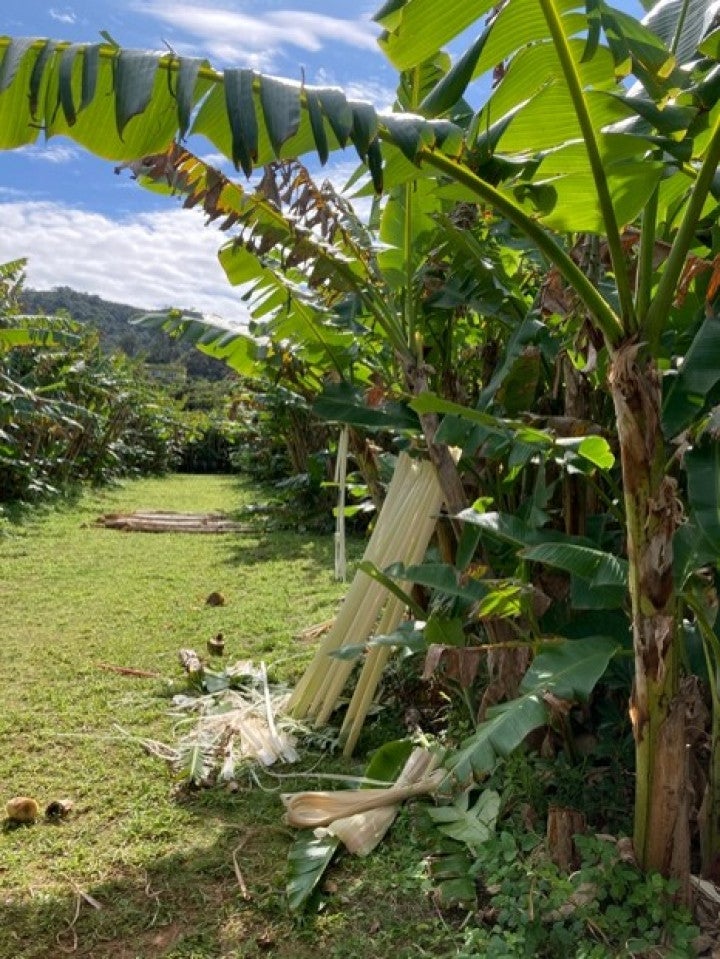
Figure 1. Basho field.
Solution
To address these issues, we are developing a new device to spin basho fiber into yarn and establish a new yarn making process inspired by traditional basho yarn production methods. Existing machineries will be integrated into the new yarn making process to increase production speed and volume to produce 100% basho yarn.
Traditionally, hand tying was the only way to make yarn due to basho’s surprisingly stiff and fragile nature. But, working with specialists in mechanics, machine design, material science, engineering, textile, and apparel, we are able to overcome these challenges by developing different solutions for the spinning process.
Our goal is to introduce the 100% basho yarn to fiber and apparel industries to not only produce Okinawa rare clothes and other products, but also keep the tradition alive for the next generations.