EbiSeq: Innovative Environmental Nucleic Acid Tools to Improve Shrimp Farming
Problem
Successful shrimp aquaculture farming relies heavily on accurate pond density and animal activity estimations. Inaccurate estimations can negatively impact production as a result of sub-optimal feeding calculations, and late detection of disease. This can lower overall yield, or lead to mass mortality, which can be devastating to both farmers and the local industry.
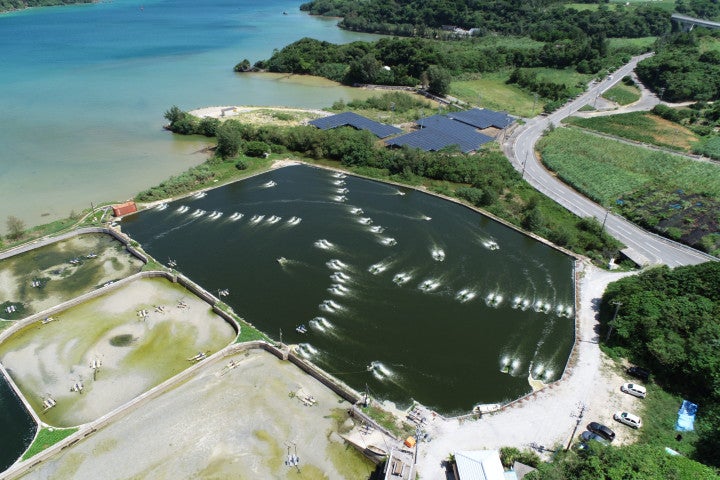
Accurate monitoring of the number and activity of shrimp in a pond is crucial to improve production, and to ensure the long-term viability of farms. However, the nature of the pond environment makes visual inspections difficult (Figure 1), with current monitoring strategies relying heavily on manual methods which are labor intensive and often inaccurate. For the local industry to be sustainable, farmers need a way to reduce feed waste and associated costs, detect disease early to prevent outbreaks, and reduce the need for labor intensive, and sometimes hazardous monitoring methods.
Figure 1. Overview of a shrimp farming pond. (Source: Yoko Shintani)
Solution
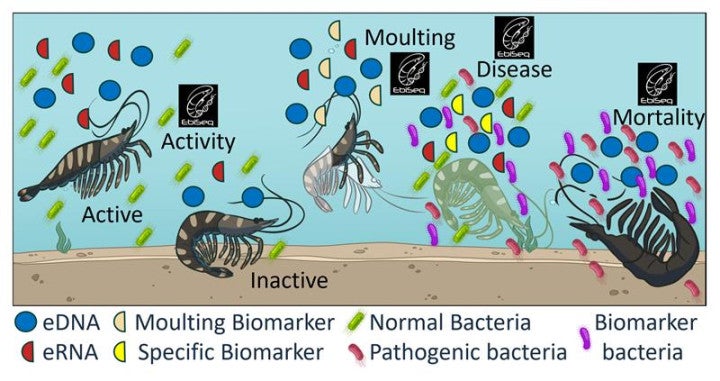
All organisms shed genetic materials in the form of nucleic acids (i.e., DNA and RNA) into their environment. These environmental nucleic acids (eNAs) can be used to detect the presence of organisms in an ecosystem. During times of stress, disease, or increased activity, a range of eNAs are shed at higher rates and so can be used to detect changes in animal health, and activity over time (Figure 2). Similarly, different types of eNAs naturally degrade at different rates, allowing us to determine if these signals are current by comparing between different eNA biomarkers.
Analyzing eNA biomarkers provides a non-invasive, cost-effective and scalable tool for monitoring animal activity and health, and the overall health of the farm environment.
Figure 2. Showing secretion of eRNA/eDNA ratios and pathogenic bacteria depending on shrimp status, which will be used to assess pond health.