12 May 2026
Exploring Your Wildest Science Dream in the Era of AI During the Science Challenge 2026

From March 8 – 14, 2026 OIST Graduate School invited 24 students in their bachelor's and master’s to visit OIST for a one-week workshop, the Science Challenge. Organized annually and held for the 11th time this year, the Science Challenge participants are asked to present their research ideas on one specific theme and experience the interdisciplinary research environment as well as student life at OIST firsthand.
This year, the workshop participants shared their wildest science dream and showed how they can make their research impactful and outstanding in the era of AI, during a 3-minute presentation at the end of the workshop.
To prepare the workshop participants to deliver a convincing presentation on their research ideas, OIST staff and researchers equipped them with presentation tips and provided individual mentorship to refine their presentations throughout the workshop week.
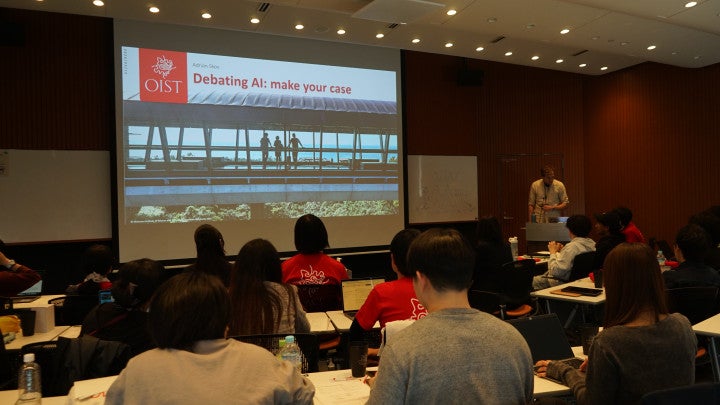
A debate, where the participants discussed the benefits and disadvantages of AI in science and a workshop on the proper use of AI and various science talks allowed the workshop participants to gain different perspectives on the impact of AI in science and to include those perspectives in their final presentations. In addition, faculty members shared their thoughts on how AI impacts research in neuroscience, chemistry and data science, when they were introducing their research during one of their science talks.
While parts of the workshop focused on presentation preparation and discussion about the use and impact of AI in science, the participants had numerous opportunities to explore the campus and research environment at OIST during campus tours, lab visits, individual appointments with faculty members, facility tours and hands-on activities.
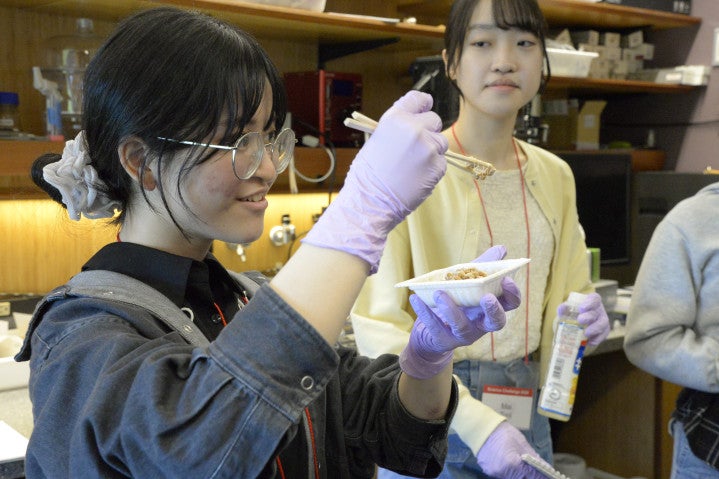
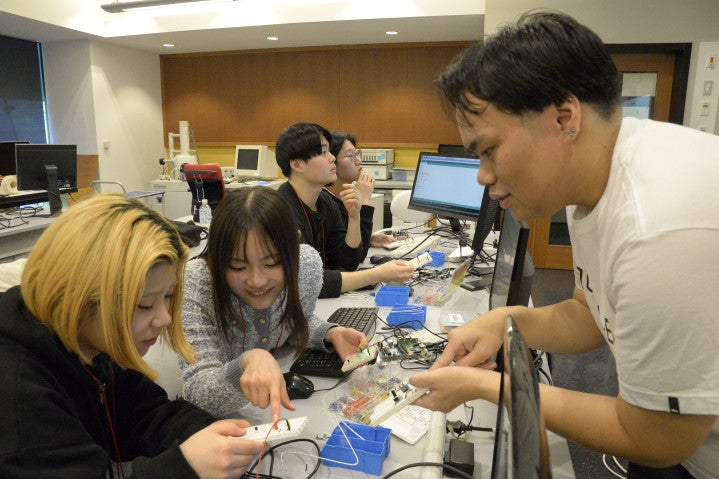
During the hands-on activities, the participants were involved in measuring fluids with everyday materials (Micro/Bio/Nanofluidics Unit), extracting RNA from fish tissues (Marine Climate Change Unit), building models for application in robotics (Cognitive Neurorobotics Research Unit), in working with single-board computers and microcontrollers (Mechanics and Materials Unit) and tracking floating graphite (Quantum Machines Unit).
Coming from diverse research backgrounds, each participant shared their individual perspective on how they would integrate AI into their research project during the final presentations on the last day of the workshop, where they competed for the “Best Presentation Award” and “Audience Award”.
The proposed research projects ranged from ideas, where AI can be a beneficial addition to current approaches and techniques in biology, data science or chemistry to ideas, where AI reduces manual labor to a minimum with the purpose of creating free time for people to use this time for their self-development or come up with their own ideas and projects.
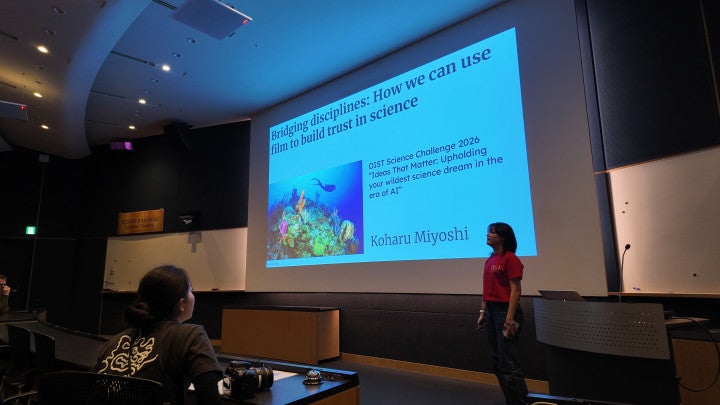
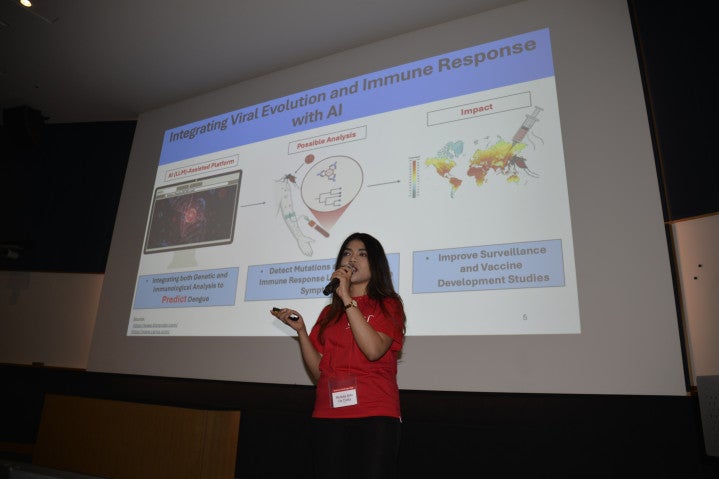
Amongst the proposed research projects, three ideas stood out to the judges, and they awarded Koharu Miyoshi from Tohoku University and Melissa Alifa Da Costa from the University of Tokyo with honorable mentions for their presentations.
Koharu Miyoshi received an honorary mention for emphasizing the importance of science education and building trust in science to enable people to pursue scientific research projects with passion and creativity that AI cannot manufacture.
Melissa Alifa Da Costa received an honorary mention for introducing the use of an AI assisted platform supporting researchers in predicting severe dengue cases by integrating genetic and immunological analysis to detect mutations.
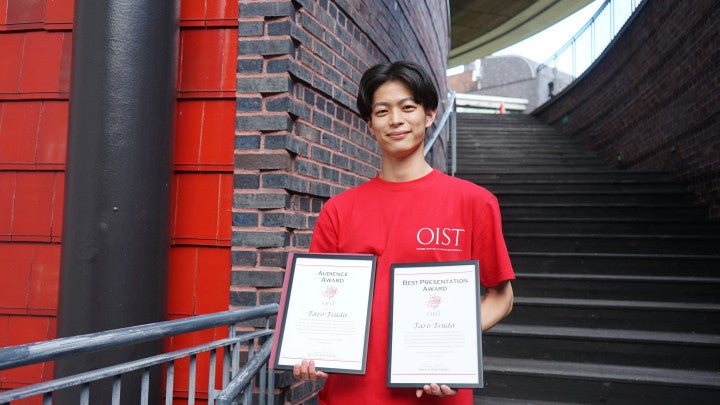
The research project that impressed both the judges and the audience was presented by Taro Tsuda, a student from Tohoku University, who was awarded the “Best Presentation Award” and “Audience Award” during the closing ceremony.
Addressing the high dependency of scallop aquaculture on wild seed and the lack of knowledge of scallop sex preventing artificial seed production, he proposed to unveil molecular pathways of sex differentiation in scallops using a scallop cell-based gene overexpression platform in combination with RNA-seq analysis and AI-supported data analysis.