


03 April 2026
Mirror Lab Symposium Explores Frontiers of Recent Human Evolution

The Mirror Lab Symposium: Frontiers in Recent Human Evolution, held at OIST on March 23–24, brought together researchers from across Europe and Asia to share new findings on the genetics of modern and archaic humans. Over two days, participants explored how ancient DNA, comparative genomics, and functional studies are reshaping our understanding of where humans came from—and how that evolutionary history continues to influence us today.
Hosted on campus and organized by the Mirror Lab, the symposium focused on genetic variants that emerged during recent human evolution, including those inherited from Neanderthals and other archaic populations. The program also highlighted advances in reconstructing population history and the early peopling of the Japanese Archipelago.
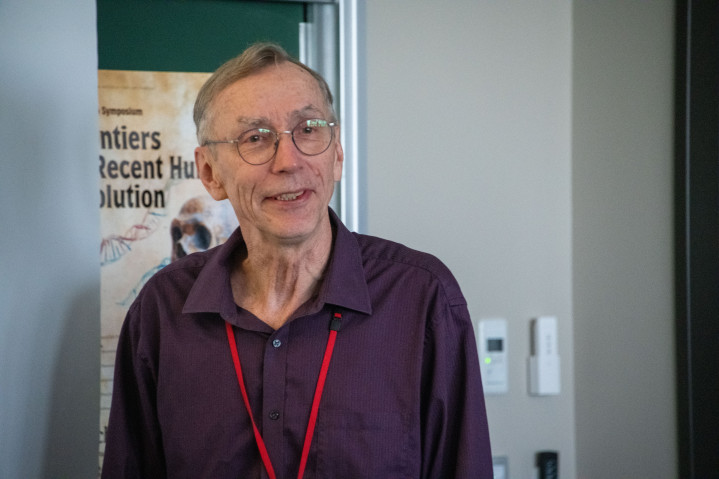
The first day opened with talks examining genetic traits gained or lost during human evolution. Dr. Hugo Zeberg (Karolinska Institute / Max Planck Institute for Evolutionary Anthropology) presented work on cellular traits present in archaic humans but no longer common in modern populations, prompting discussion on how selective pressures may shape complex biological functions.
Several presentations focused on adaptations that distinguish modern humans from other primates. Dr. Daniel Aldea (Aix-Marseille University) explored the genetic basis of humans’ high sweat gland density, an adaptation thought to support endurance and thermoregulation. Dr. Javier Yu Peng Koh (Duke-NUS Medical School) discussed comparative approaches to understanding gene function, demonstrating how insights from non-human species can inform human evolutionary biology.
Methodological advances were another theme of the day. Dr. Leo Speidel (RIKEN) presented new approaches for reconstructing whole-genome genealogies, revealing previously hidden population structure and migration patterns. These computational tools sparked discussions about how increasingly detailed models are changing interpretations of human demographic history.
On the second day, attention turned to ancient DNA and its functional consequences in modern humans. Dr. Volker Soltys (Max Planck Institute for Evolutionary Anthropology) described how a Neanderthal-derived gene variant affects thermogenesis, illustrating how archaic ancestry can influence present-day physiology. Talks by Dr. Aina Colomer i Vilaplana (RIKEN) and Dr. Stephan Riesenberg (Max Planck Institute) highlighted analytical and experimental methods for inferring ancient adaptation and testing evolutionary hypotheses.
The program also featured a strong regional focus on Japan and East Asia. Dr. Masatoshi Matsunami (University of the Ryukyus) discussed recent human evolution in the Ryukyu Archipelago, addressing how genetic data can complement archaeological and anthropological evidence. OIST researchers from the Human Evolutionary Genomics Unit presented work connecting ancient genomes to functional outcomes in neural and muscular systems.
A keynote presentation by Dr. Svante Pääbo, Adjunct Professor at OIST and Director at the Max Planck Institute for Evolutionary Anthropology, drew particular attention. His talk on the Shirahosaonetabaru genome provided insights into early populations in Japan and their broader evolutionary context, emphasizing the value of regional ancient DNA for global evolutionary questions.
Across both days, sessions included extended question-and-answer periods, encouraging dialogue between speakers and attendees. Discussions frequently returned to the challenge of linking genetic variation to biological function, as well as the need for closer collaboration between computational, experimental, and regional research efforts.
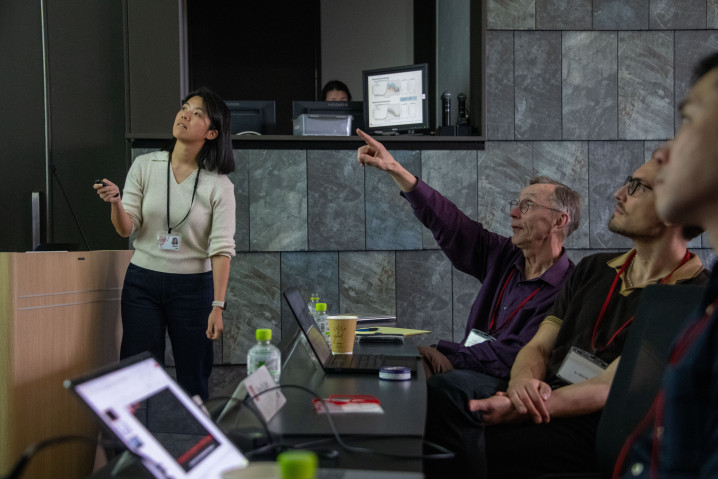
The symposium concluded with an open discussion on future research directions and opportunities for collaboration. Participants emphasized the importance of shared datasets, interdisciplinary training, and continued international partnerships in advancing the study of human evolution.
By convening experts working at the intersection of genomics, evolution, and functional biology, the Mirror Lab Symposium provided a timely snapshot of progress in the field. It also underscored OIST’s role as a hub for collaborative research on human origins—connecting global perspectives with regionally grounded studies to better understand the evolutionary forces that shaped our species.


