Metal Oxides as Catalysts in Mechanochemistry: Developing Cost-Efficient and Green Techniques for Small Molecule Drug Synthesis
Problem
Introducing halides into organic molecules poses an important tool in drug chemistry, and fluorine is of particular interest. Fluorinated drugs feature a modified metabolic stability, hydrogen-bonding ability, lipophilicity and hydrophilicity, as well as an improved ability to cross the blood-brain barrier over their non-fluorinated counterparts. Nowadays, about 20% of all registered drugs comprise at least one fluorine atom, and the trend is rising.
A similar approach to changing a drug’s properties is deuteration. Similarly to fluorination, this technique alters the drug’s metabolic stability due to the kinetic isotope effect, as well as other properties of the drug molecules. Despite using different chemical groups, both techniques have many drawbacks, including the use of bulk solvent in the classical synthetic methodology, which results in hazardous waste production, the use of expensive catalysts or inert atmosphere. Therefore, more environmentally friendly and cost-effective synthetic methods are needed.
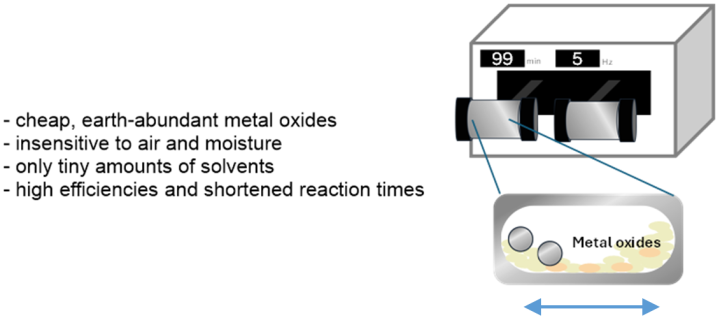
Figure 1. Mechanochemical approach to chemical synthesis using simple metal oxides, minerals, or bio-derived materials.
Solution
We utilize the mechanochemical technique, which is currently the number one disruptive technology in the field of organic synthesis and the yearly number of publications has more than doubled in the last decade.
Unlike traditional solution-based approaches, in which chemicals are fully dissolved, this technique relies on grinding solid reagents with balls. This way, the use of large amounts of environmentally harmful solvents can be avoided. A major fraction of this field revolves around piezoelectric metal oxides, which were shown to promote a variety of reactions, limiting the number of their possible applications.
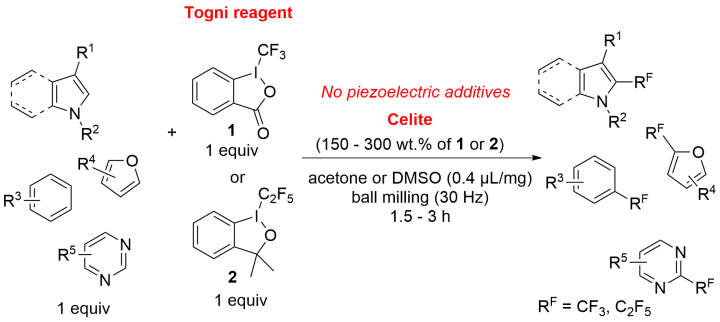
Our novel approach reduces costs and resource consumption while decreasing the environmental footprint by using a wide range of metal oxides, minerals, and other abundant and cheap materials, including (mostly) non-piezoelectric materials as promoters.
Figure 2. Mechanochemical perfluoroalkylation using celite or other additives developed in our group.