



Two Seminars "Controlling and Sensing Spin Systems with Free Space Electrons" by Prof. Philipp Haslinger, and "Electron-Photon Entanglement in Electron Microscopy" by Mr. Alexander Preimesberger, Vienna University of Technology
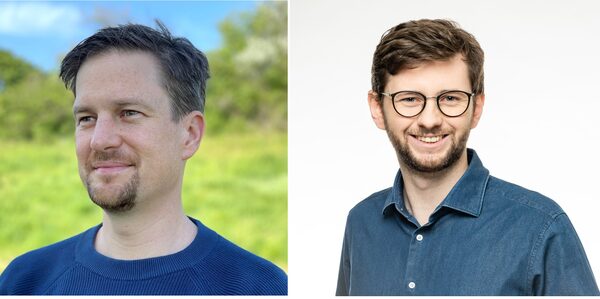
Description
Speakers: Prof. Philipp Haslinger and Mr. Alexander Preimesberger, University Service Centre for Transmission Electron Microscopy (USTEM), Technische Universitaet Vienna, Austria
Date: Wednesday, June 3, 2026
Time: 14:00-15:20 (40 mins talk x2)
Venue: C700, Level C, Lab 3
Seminar 1
Title: Controlling and Sensing Spin Systems with Free Space Electrons (Prof. Philipp Haslinger)
Abstract: Coherent control and detection of quantum systems are central to quantum technologies. Beyond excitation with optical and microwave fields, free-space electrons can be used to manipulate and detect quantum systems with unique spatial and spectroscopic resolution. In this talk, I outline our theoretical framework [1] showing that the non-radiative near-field of a spatially modulated electron beam can coherently drive quantum systems and show preliminary experimental data [2]. I then present our SPINEM (Spin Electron Microscopy) platform [3], which integrates continuous-wave electron spin resonance (ESR) spectroscopy into a transmission electron microscope (TEM). Using a miniaturized microwave resonator with the free-space electrons of a TEM [4], we enable in-situ, phase-locked detection of microwave-driven spin precession with picoradian deflection sensitivity (~280 prad) for localized spin spectroscopy. Finally, I discuss a roadmap toward atomic resolution and single-spin sensitivity [5], opening opportunities in nanoscale spintronics, magnonics, and quantum materials.
[1] D. Rätzel, D. Hartley, O. Schwartz, and P. Haslinger, Controlling Quantum Systems with Modulated Electron Beams, Phys. Rev. Res. 3, 023247, (2021).
[2] M. Kolb, T. Spielauer, T. Weigner, G. Boero, D. Rätzel, P. Haslinger, Coherent Driving of a Quantum System with Modulated Free-Space Electrons, arXiv:2509.13904 (2025).
[3] A. Jaroš, J. Toyfl, A. Pupić, B. Czasch, G. Boero, I. Bicket, P. Haslinger Electron spin resonance spectroscopy in a transmission electron microscope, Ultramicroscopy, 278, 114224, (2025)
[4] A. Jaroš, M. Seifner, J. Toyfl, B. Czasch, S. Beltrán-Romero, I. Bicket, P. Haslinger, Sensing Spin Precession with Free Electrons, ACS Nano, 20, 4, 3435, (2026)
[5] P. Haslinger, S. Nimmrichter, D. Rätzel, Spin Resonance Spectroscopy With an Electron Microscope, QST, 9, 035051 (2024).
Title: Electron-Photon Entanglement in Electron Microscopy (Alexander Preimesberger)
Abastract:Entanglement is a central resource in quantum technologies, yet it has only recently become accessible in free-electron optics. In my presentation, I will present our recent experimental demonstration of quantum correlations between free electrons and cathodoluminescence photons generated inside a transmission electron microscope [1].
Using 200 keV electrons passing through a thin silicon membrane, we produce correlated electron-photon pairs via transition radiation. A time-resolved single-photon detector and a Timepix3-based direct electron detector allow us to identify coincident pairs and measure their transverse position and momentum correlations. By adapting ghost-imaging techniques [2] and an entanglement witnesses from photonic quantum optics, we quantify these correlations and show a violation of the MGVT separability bound [3], providing evidence for continuous-variable electron-photon entanglement.
We hope that these results will help to make entanglement available as a resource for electron microscopy, enabling novel measurement schemes inspired by photonic quantum optics.
[1] A. Preimesberger, S. Bogdanov, I.C. Bicket, P. Rembold, P. Haslinger, arXiv:2504.13163.
[2] M. J. Padgett and R. W. Boyd, Philos. Trans. R. Soc. A 375, 20160233, (2017).
[3] S. Mancini, V. Giovannetti, D. Vitali, P. Tombesi, Phys. Rev. Lett. 88, 120401 (2002).
Add Event to My Calendar
Subscribe to the OIST Calendar
See OIST events in your calendar app