



【Seminar】"How Circuits Learn: Projection Operators, Memory, and Computation in Analog Hardware" by Dr. Frank Barrows
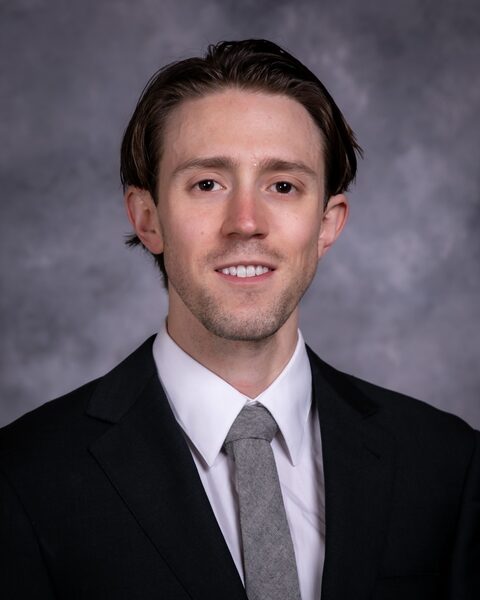
Description
Abstract
Analog computing has several potential advantages beyond efficiency gains. The central opportunity is algorithmic: physical constraints (Kirchhoff's laws, conservation, dissipation, phase locking) let us embed a problem directly into a dynamical circuit so that computation is performed by continuous-time evolution toward fixed points, limit cycles, or steady states.
In this talk I will outline a theory of physical computation in which hardware primitives are compared by the operators they realize: fixed-point maps, projectors, attractor basins, and compositional rules. I will ground this perspective in recent work on memristive and resistive networks, where circuit topology induces projection operators that determine reachable fixed points, capacity bounds, and the composability of trained submodules; exact physical learning rules for passive resistor networks; and coupled oscillator networks whose attractor landscapes support autonomous learning and generative modeling.
Biography
Frank Barrows is a Staff Scientist in the Theoretical Division at Los Alamos National Laboratory. He received a PhD in Physics and an MD from Northwestern University. His research sits at the intersection of neuromorphic computing, quantum dynamics, non-equilibrium physics, and operator-algebraic methods. He studies how physical systems compute, learn, and store information through their native dynamics.
Zoom
https://oist.zoom.us/j/94995105663?pwd=QxSiJvdpIsbm58cArUpRaccDRcEuIH.1
Meeting ID: 949 9510 5663
Passcode: 680460
Note: In the event of campus closure because of typhoon, the seminar will
take place on zoom at the same time.
Add Event to My Calendar
Subscribe to the OIST Calendar
See OIST events in your calendar app