



09 December 2025
OIST Hosts Second International Administration Forum, Welcoming 33 Participants From 18 Universities and CAO

From November 26 to 28, the Okinawa Institute of Science and Technology Graduate University (OIST) hosted the second International Administration Forum, bringing together 32 participants from 18 universities across Japan, along with representatives from the Cabinet Office (CAO). Over the course of 2.5 days, the event created a vibrant platform for the exchange of perspectives on graduate school administration, internationalization, and the evolving needs of Japan’s global higher education landscape.
The forum opened with a greeting message from senior OIST leadership and an introduction to the structure of the OIST Graduate School by the Dean of the Graduate School. This set the stage for a program that combined presentations, discussions, and informal exchanges. The opening icebreaker helped participants form connections quickly, and this spirit of openness continued throughout the event, revealing a shared commitment across Japanese universities to strengthening international approaches to graduate education.

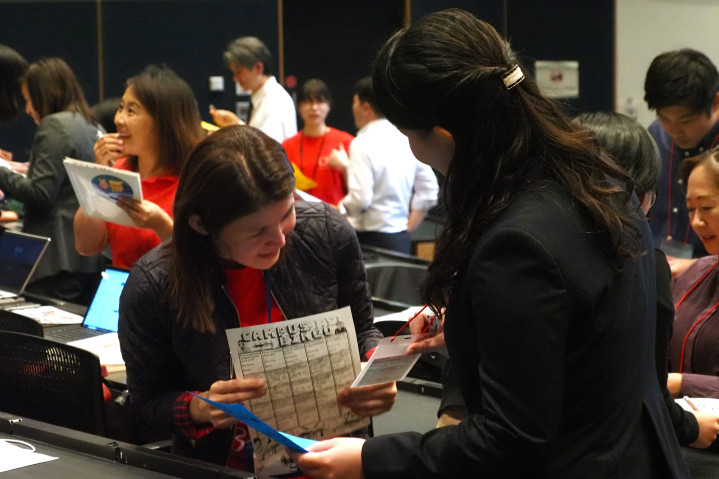
Throughout the three days, the forum focused on several broad themes, including student recruitment and mobility, industry–academia collaboration student support, and the development of empowered administrative staff. Rather than delivering prescriptive models, OIST staff framed these topics as starting points for discussion and information exchange. While the program included presentations, campus tours, workshop-style sessions, and unstructured discussion times, the overall purpose remained clear: to create opportunities for meaningful conversation and shared learning.
One distinguishing feature of OIST is that its graduate program has been built almost entirely from scratch over the past decade. This has allowed the university to design administrative systems without the constraints of legacy structures and to experiment with new approaches to recruitment, support services, curriculum planning, industry partnerships, and organizational workflows. Many of these innovations are now routine at OIST, even though several remain new concepts within Japan’s broader higher education system.
The goal of the forum was not only to introduce these practices but also to explore how they might be adapted elsewhere. Participants gained insight into how OIST’s administrative teams approach problems, how decisions are made, and how lessons learned are incorporated along the way. Many attendees noted that understanding why OIST chose certain structures was just as valuable as learning what OIST currently does.
Perhaps most importantly, the forum gave participants the chance to speak directly with OIST Graduate School staff. Conversations during coffee breaks, campus tours, shared meals, and various engagement sessions helped clarify how OIST’s administrative units operate on a day-to-day basis and allowed participants to compare challenges and exchange ideas in a relaxed environment. These interactions allowed the participants to also discuss potential areas where forces can be combined to tackle ongoing administrative hurdles that exist at all universities.
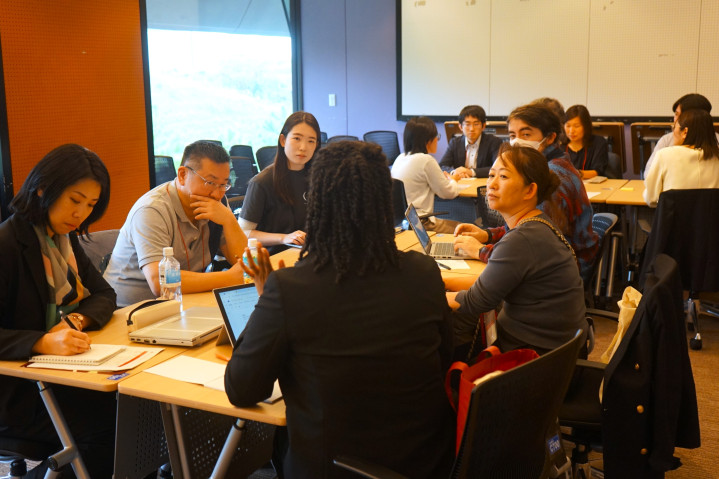
The feedback from attendees highlighted the value of being able to observe OIST’s systems up close and to discuss openly both the successes and the ongoing challenges of running an international graduate school in Japan. Participants also appreciated the diversity of perspectives represented in the room, which helped situate OIST’s practices within a broader national context and effectively fulfilled promoted mutual understanding and learning.

The forum concluded with remarks from the OIST President Dr. Karin Markides, who emphasized the importance of continued collaboration among Japanese universities as they work to strengthen their global engagement. Many participants expressed a strong interest in maintaining the connections formed during the event and developing follow-up activities that would build on the momentum generated over the three days.
One participant summed up the experience by saying, “This forum was truly inspiring. It showed the value of sharing our challenges and ideas openly, and I look forward to building a closer collaboration between OIST and my own university moving forward.”


