20 February 2026
OIST-Keio Showcase Talk Series Vol. 9 Spotlights Cryo EM Breakthroughs and Protein Science Innovation

The Okinawa Institute of Science and Technology (OIST) and Keio University welcomed researchers from across Japan for the ninth installment of the OIST–Keio Showcase Talk Series, Proteins in Focus: Cryo-EM and Structural Frontiers, held on January 27, 2026, at the Sydney Brenner Lecture Theater. The event brought together leading experts in protein science, structural biology, and cryo-electron microscopy (cryo EM) to explore how emerging technologies are reshaping our understanding of molecular mechanisms and enabling innovations across biotechnology, medicine, and environmental science. This event was held as part of the J-PEAKS program.
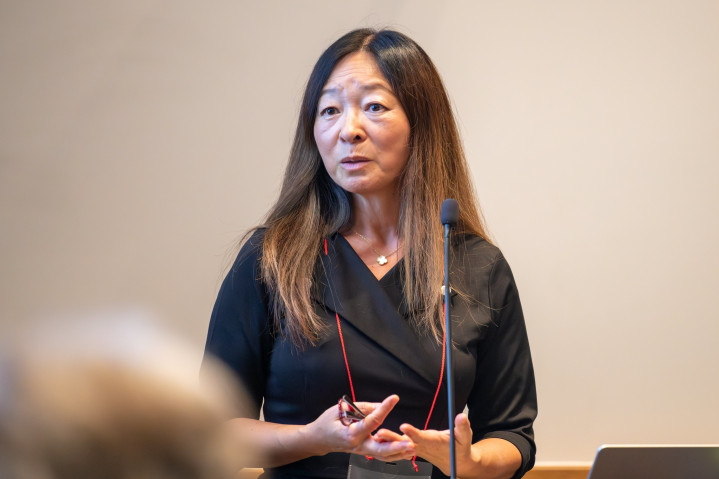
As part of the ongoing collaboration between OIST and Keio University, the symposium featured speakers from Keio, OIST, and the University of Osaka’s Institute for Protein Research. The goal of the showcase series is to foster interdisciplinary exchange and cultivate long-term research partnerships. The meeting opened with remarks from OIST Provost Dr. Amy Shen and Keio Vice President for Research Dr. Toshiharu Saiki, setting the stage for a full day of scientific dialogue.
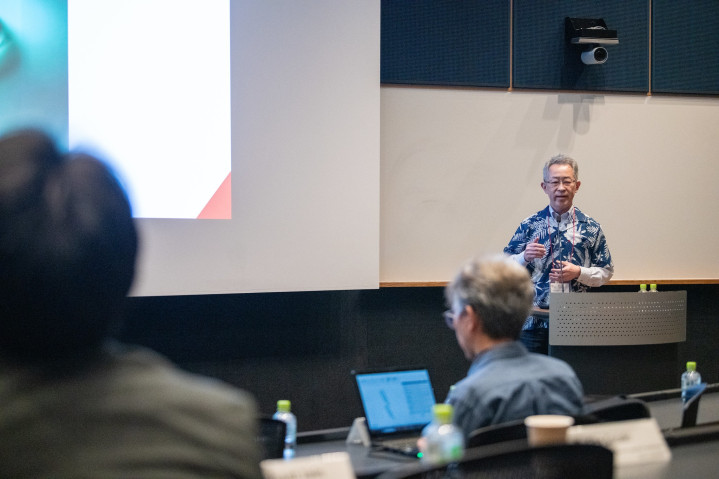
The morning sessions highlighted breakthroughs in understanding fundamental biological processes at the molecular scale. Professor Genji Kurisu of the University of Osaka opened with insights into the structural basis of protein shells that enable efficient CO₂ fixation in diatom pyrenoids—key components of photosynthetic machinery.
Dr. Takanori Yokoo of Keio University followed with an exploration of the structural basis for interactions between a blood–brain barrier permeable nanobody and TfR1. This research holds significant translational potential, particularly for therapeutic delivery strategies targeting neurological diseases.
OIST’s own contributions included a presentation by postdoctoral scholar Dr. Prashant Jain, who described how subtle changes within kinase activation loop dynamics can dramatically alter cellular signaling pathways. His findings demonstrated how structural biology can reveal finetuned molecular behaviors that have wide-reaching implications for drug development.
The morning session concluded with Professor Takayuki Kato (University of Osaka), who highlighted the challenges of visualizing the early steps of protein biogenesis using cryo EM. His talk pointed to the need for continued innovation in sample preparation, imaging technology, and computational analysis.
The afternoon program centered on expanding the toolkit for visualizing biological systems. Keio University’s Dr. Eita Sasaki introduced a new fluorescent protein–dye hybrid probe designed to assess intracellular molecular crowding, offering a powerful method to monitor cellular environments.
From OIST, Professor Matthias Wolf highlighted the architecture and contractile transformation of bacteriophages Bas63 and ɸTE—viruses whose structural dynamics provide insights relevant to both microbiology and nanotechnology.
Another highlight came from Dr. Kunimichi Suzuki of Keio University, who discussed the creation of a new cryoEM core facility and processing pipeline at Keio’s Bio2Q Center. The facility will support advances across diverse biological and medical disciplines by making cutting-edge cryoEM capabilities more widely accessible.
Dr. Oleg Sitsel (OIST) closed the technical sessions with an overview of the current landscape and emerging directions in cryoelectron tomography (cryoET). His talk emphasized how cryoET’s ability to capture three-dimensional structures within native cellular contexts is redefining the limits of molecular visualization.
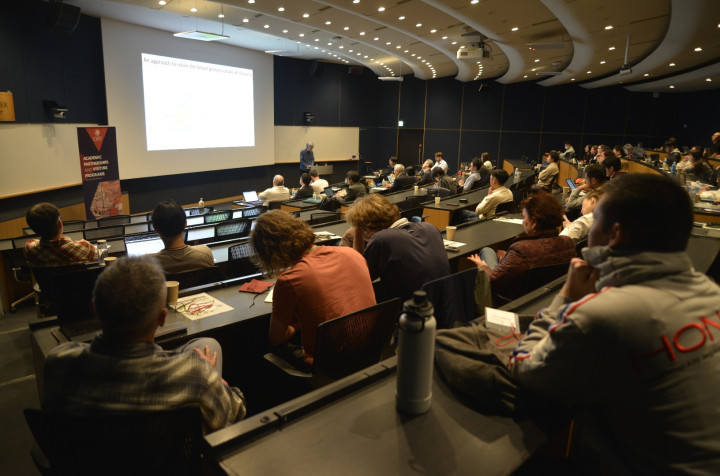
Later in the day, Keiko Okano from the Keio University Global Research Institute (KGRI) delivered a brief address on OIST–Keio joint research opportunities, emphasizing the importance of continued institutional synergy.
The symposium also served as a prelude to the 2026 CryoElectron Microscopy Course held January 28–30, aimed at training the next generation of structural biologists through hands-on workshops and expert demonstrations.
As cryo EM and complementary structural tools advance, events like the OIST–Keio Showcase Series Vol. 9 continue to play a vital role in uniting researchers, sparking new ideas, and accelerating discoveries at the molecular frontier.