Integrative Community Ecology Unit
Assistant Professor David Armitage
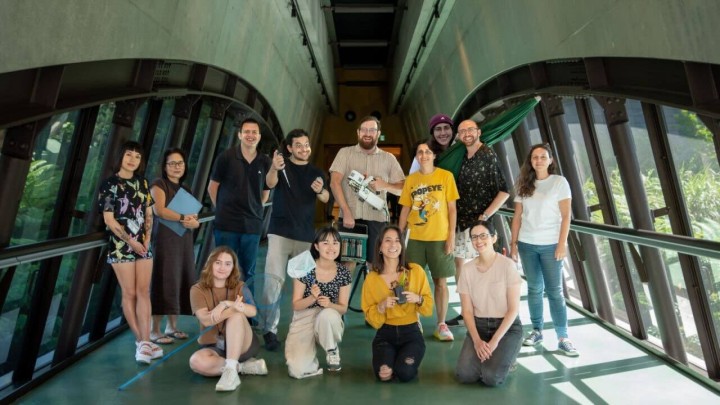
From L to R: Su'ad, Shizuka, Aurika, Ethan, Alex, Chii, Dave, Nonno, Matin, Helene, Sam, Katie, Rahel
Abstract
Most of our planet's ecosystems are currently impacted by habitat loss, emerging pathogens, globalization, and climate change. The results of these stressors can re-shuffle the species interactions upon which biodiversity and human wellbeing rely. Our unit merges theory, genetics, and chemistry to understand how species interactions vary over space and time and to affect ecosystem structure and functioning.
1. Staff
Dr. David Armitage, PI
Nonno Hasegawa, Graduate Student
Rahel Ruppli, Graduate Student
Dr. Matin Miryeganeh, Staff Scientist
Dr. Su'ad Yoon, Postdoctoral Researcher
Dr. Samuel Ross, Postdoctoral Researcher
Yong Heng Phua (rotation student)
Noah Locke (rotation student)
Callum Hudson (rotation student)
Alexandro Alonso Sánchez, Unit Technician
Katharine Saunders, Unit Technician
Shizuka Kuda, Research Unit Administrator
2. Collaborations
2.1 Rapid disruption of plant-pollinator matching under climate warming
Type of collaboration: Joint research
Researchers:
Professor Tingfa Dong, China West Normal University
2.2 Intra-annual population divergence in heat tolerance in a pest insect
Type of collaboration: Joint research
Researchers:
Dr. Liang Zhu, Institute of Plant Protection, Chinese Academy of Agricultural Sciences
2.3 Developing response diversity as an integrative measure of ecosystem stability
Type of collaboration: Joint research
Researchers:
Professor Owen Petchey, University of Zurich
Professor Takehiro Sasaki, Yokohama National University
2.4 Scale-dependent processes in phyllosphere microbial ecology
Type of collaboration: Joint research
Researchers:
Prof. Morgan Carter, University of North Carolina, Charlotte
Prof. Robin Choudhury, University of Texas Rio grande Valley
Prof. Mitja Remus-Emsermann, Freie Universitat Berlin
Prof. Cindy Morris, INRAE
Prof. Johan Leveau, University of California Davis
Prof. Linda Kinkel, University of Minnesota
Prof. J.P. Dundore-Arias, California State University Monterey Bay
2.5 Statistical best-practices for empirical coexistence studies
Type of collaboration: Joint research
Researchers:
Dr. Chris Terry, Oxford University
3. Activities and Findings
3.1 Causes and consequences of phytochemical variation
This project, funded through a combination of JSPS Early-Career Kakenhi, JSPS Postdoctoral Fellowships, and a JGI CSP award, seeks to understand how variation in plant secondary chemistry affects interactions at other trophic levels. We are focusing on the plant genus Crotalaria, which fixes nitrogen from the atmosphere with the aid of the symbiotic root-nodulating bacteria, Bradyrhizobium. The plant also produces copious concentrations of pyrrolizidine alkaloid chemicals, which are highly toxic to many would-be herbivores. We are investigating how variation in the symbiotic microbial partnership influences alkaloid production by the host plant, and how this variation in alkaloid concentrations influence the communities of herbivores, decomposers, and predators that associate with the plant.
A second ongoing project concerns the phytochemical characterisation of all major plant species in Okinawa. We use a combination of NMR, liquid chromatography-mass spectrometry, and elemental analysis to generate phytochemical "fingerprints" for each plant species. We then use these to investigate how the chemistry of plant communities varies over the landscape. For example, between agricultural land, urban green spaces, and surrounding natural forest.
3.2 Spatial population genetics of interacting species
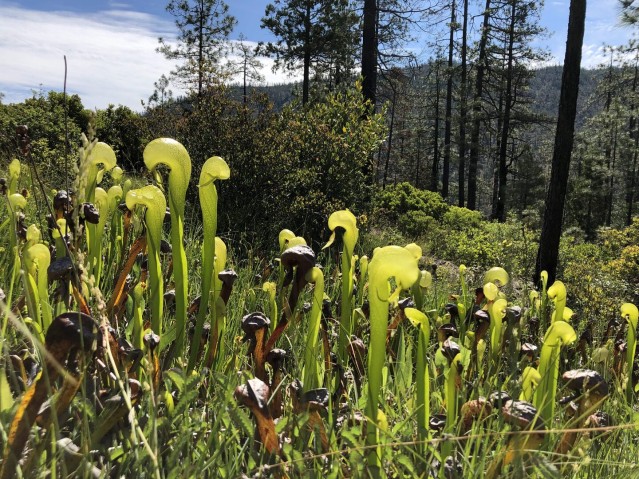
Plant-animal interactions are often asymmetric. That is, one partner (usually the animal) relies completely on the plant for food or shelter, while the plant does not require, or is harmed by, the actions of the animal. In cases like these, the evolutionary maintenance of this association requires that animal partners be able to successfully locate and migrage between populations of the host plants. When host plants are rare, however, this task is particularly challenging. Our goal is to use the tools of landscape genetics to identify how barriers to gene flow between populations manifest for the various symbiotic partners. Do the plant and its obligate symbionts show concordant patterns of gene flow, or are they different based on each species' particular dispersal traits? Further, does the genetic connectivity of these animals' populations decline near their host's range margin, leaving these populations less able to acclimate or adapt to environmental change? To empirically test these questions, we use the carnivorous pitcher plant Darlingtonia califorica and the midge and mite species that are found inside of its pitcher leaves to map and compare gene flow networks of interacting species across the landscapes of California and Oregon in the United States.
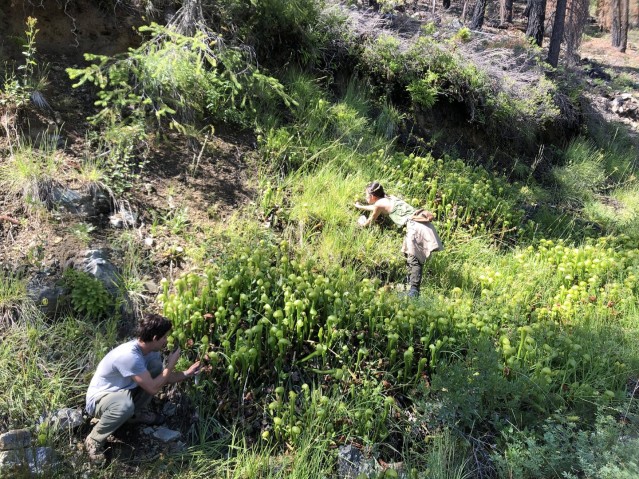
During summer 2022, we exhaustively collected genetic samples from pitcher plants and their symbionts from every known population within their range. DNA sequencing of these samples is currently ongoing.
3.3 Bat evolutionary ecoimmunology
The immune systems of bats are unique among mammals in their ability to prevent inflammation arising from infection with pathogens. This may be one reason why bats can serve as asymptomatic reservoirs for many diseases that eventually jump to humans, including hemorragic fevers and coronaviruses. Led by our resident immunologist, we have developed a molecular method to capture and sequence the 'immunome' — or the set of all immune genes — across all major bat groups. Current efforts are dedicated to obtaining high-quality DNA from museum-preserved bat tissue specimens to investigate questions pertaining to the effects of geography (e.g., latitude) and life history traits (e.g., group living, migration, etc.) on the evolution the bat immune system.
3.4 Response diversity as a predictor of ecosystem stability
Response diversity can be understood as the range of responses exhibited by members of an ecological community following some kind of environmental change or perturbation.
Following the publication of our recent paper, we are now starting a mescocosm experiment using freshwater plant communities to investigate the role of response diversity in shaping overall stability of important ecosystem functions (biomass production, carbon capture, etc.) following nitrogen additions similar to those impacting fresh waters worldwide.
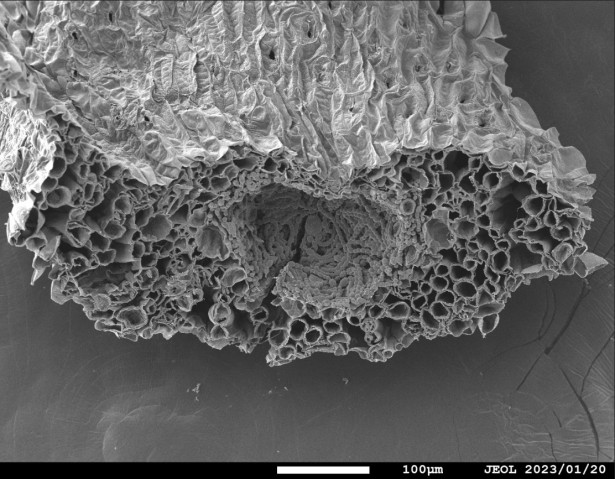
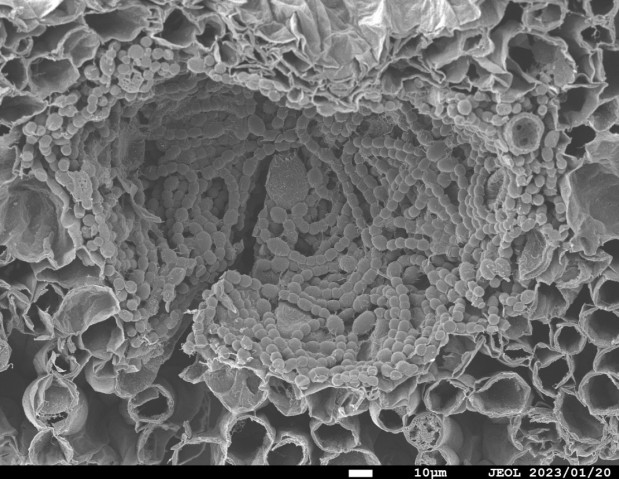
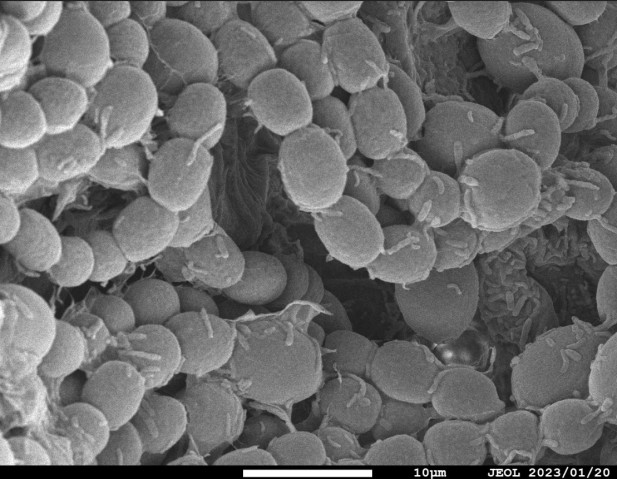
3.5 Azolla-cyanobacteria symbiosis
This ongoing project involves the characterization of bacterial symbionts associated with the aquatic fern genus Azolla. The tiny leaves of these plants are hollow and contain a nitrogen-fixing symbiotic cyanobacterium. Importantly, these symbionts are among the only known N-fixing symbionts that are transferred from parents to offspring, and have therefore diversified alongside their host plants. Using a globally-spanning germplasm collection of the plants, we have successfully sequenced and assembled the genomes of these symbionts from 24 geographically-distinct Azolla strains and have found that they all undergone dramatic reductions in their functional genomic repetoire, rendering a large proportion of their genes obsolete (compared to their nearest free-living relatives).
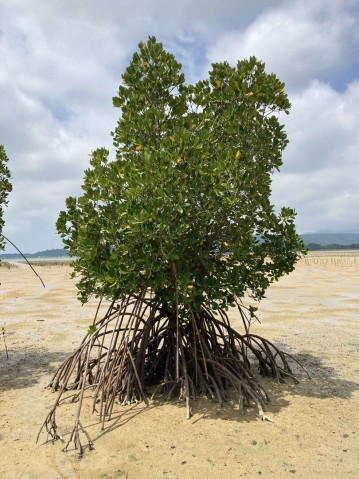
3.6 Mechanisms of stress tolerance in mangroves
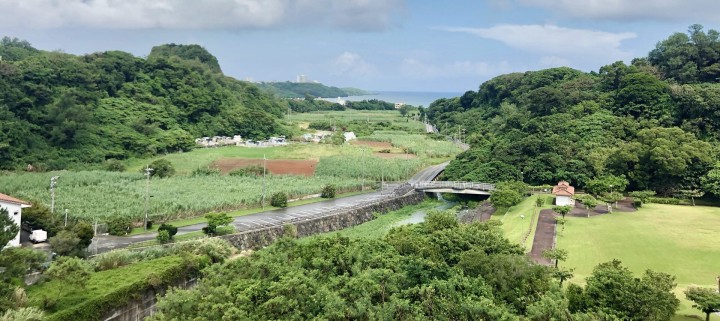
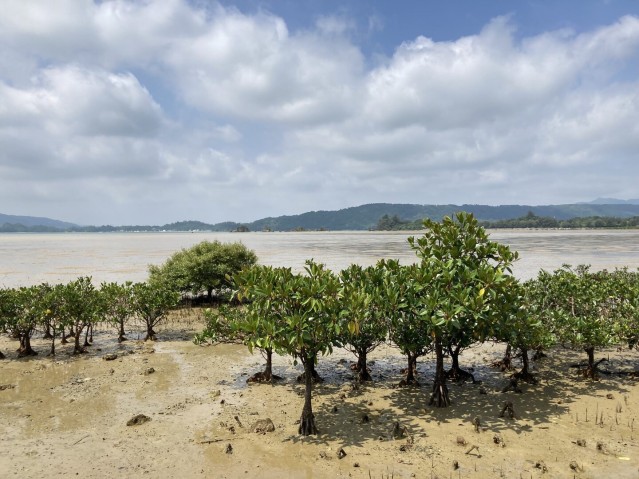
Okinawa is at or near the northern range limit of 6 species of saltwater-tolerant mangrove trees. We are using a combination of transcriptomics, epigenetics, and phytochemistry to better understand phenotypic variation to stressors at this range margin, with future plans to compare these populations to those in more equatorial regions.
4. Publications
4.1 Journals
Published
Armitage DW, Carter ME, Choudhury RA, Remus-Emsermann MNP, Morris CE, Leveau JH, Kinkel LL, Dundore-Arias JP. (in press). Predictive ecology and management of phyllosphere microbial communities through cross-scale synthesis. Phytobiomes
Ross SRP-J, Petchey OL, Sasaki T, Armitage DW (2023) How to measure response diversity. Methods in Ecology and Evolution. Open access link
Ross SRP-J, O'Connell DP, Deichmann JL, Desjonqueres C, Gasc A, Phillips JN, Sethi SS, Burivalova Z.(2023) Passive acoustic monitoring provies a fresh perspective on fundamental ecological questions. Functional Ecology. Early View. Open access link
Armitage DW (2022) Global maps of lake surface water temperatures reveal pitfalls of air-for-water substitutions in ecological prediction. Ecography. Early View
Ross SRP-J, Friedman NR, Dudley KL, Yoshita T, Yoshimura M, Economo EP, Armitage DW, Donohue I (in revision) Habitat degradation homogenizes ecological respones to typhoons across a subtropical island. bioRxiv.
Armitage DW (in revision) To remain modern, the coexistence programme requires modern statistical rigour. bioRxiv.
Dong T, Lin Y, Yang YQ, Lu SY, Wang L, Li DF, Zhong ND, Huang QX, Donald ML, Armitage DW, Wang Q. (in revision) Warming driven shifts in floral traits cause female-biased functional mismatch in bumblebee-pollinated Impatiens oxyanthera. Draft available on request.
4.2 Books and other one-time publications
Nothing to report
4.3 Oral and Poster Presentations
Samuel Ross, oral presentation, Annual Meeting of the Ecological Society of America, 2022



 PDF
PDF