


This map highlights ant biodiversity centers in Asia—areas that harbor many ant species with small ranges. The different colors indicate how the importance of each region may change with future research around the globe. Red areas are predicted to decreas

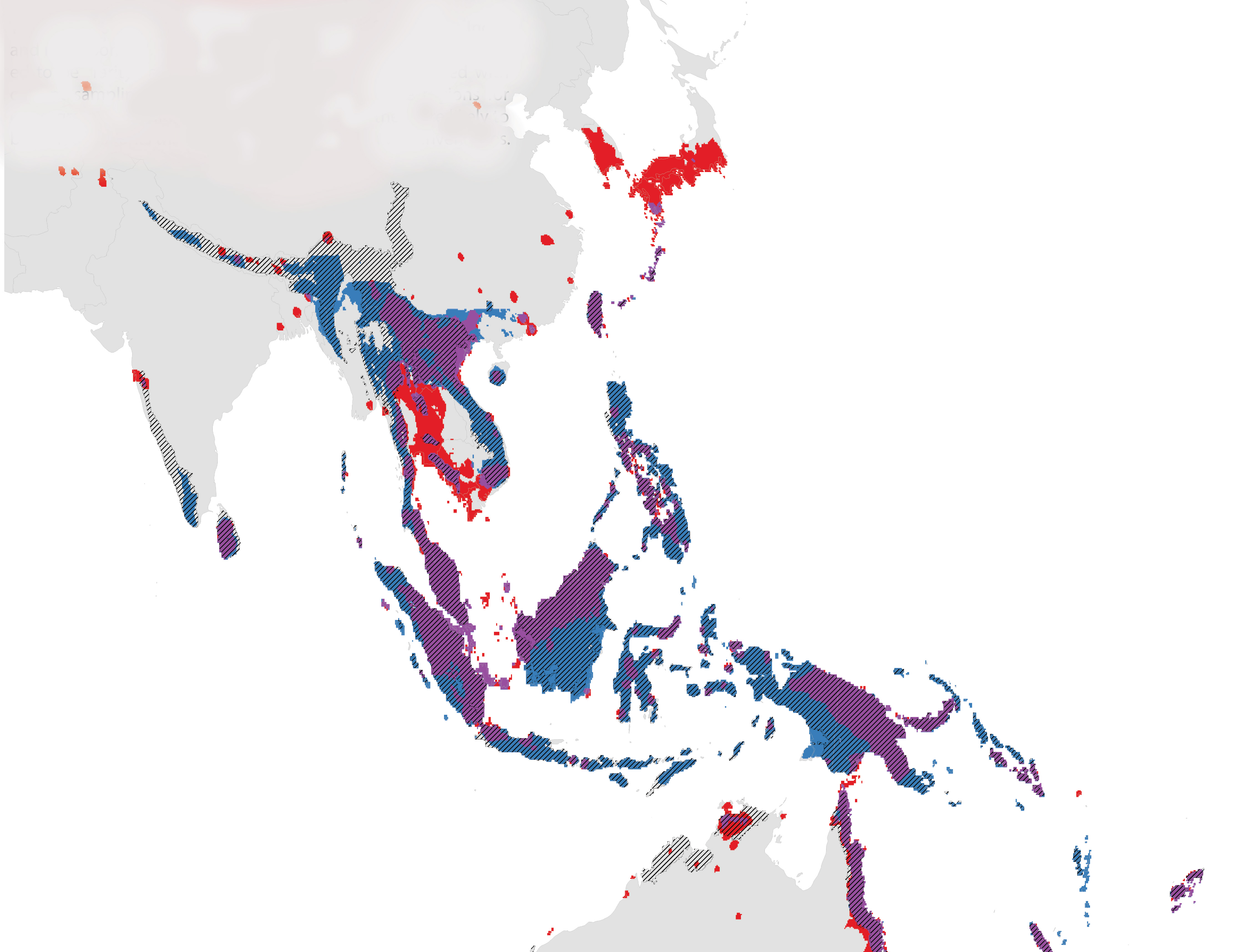
This map highlights ant biodiversity centers in Asia—areas that harbor many ant species with small ranges. The different colors indicate how the importance of each region may change with future research around the globe. Red areas are predicted to decrease in importance, purple areas will remain among the most important regions even after more areas are studied, and blue indicates areas that should be targets for exploration as they are predicted to harbor hidden diversity. This is a modified version of a figure in the paper.
This map highlights ant biodiversity centers in Asia—areas that harbor many ant species with small ranges. The different colors indicate how the importance of each region may change with future research around the globe. Red areas are predicted to decrease in importance, purple areas will remain among the most important regions even after more areas are studied, and blue indicates areas that should be targets for exploration as they are predicted to harbor hidden diversity. This is a modified version of a figure in the paper.
Copyright OIST (Okinawa Institute of Science and Technology Graduate University, 沖縄科学技術大学院大学). Creative Commons Attribution 4.0 International License (CC BY 4.0).