


Towards Fair Resource Distribution in Quantum Networks
Description
13 April 2026
Title: Towards Fair Resource Distribution in Quantum Networks
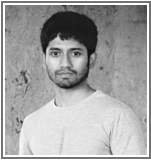
Speaker: Dr. Sounak Kar, QuTech, TU Delft
Abstract of Talk :
The problem of efficient and fair resource sharing among heterogeneous applications in classical networks is addressed via the Network Utility Maximization (NUM) framework. Drawing on welfare economics, NUM encodes individual well-being through utility functions, aggregates them into a social welfare function called network utility, and maximizes it over feasible rate allocations. While transmission rate is the only communication resource in classical networks, quantum communication depends on both entanglement generation rate and fidelity, which are in general interdependent. The quantum network utility maximization (QNUM) framework addresses fair resource distribution in this setting, where individual utility reflects the dependence on both rate and fidelity, with fidelity encoded via an entanglement measure specific to the underlying application. The QNUM formulation was however shown to be nonconvex [1], which means there is no guarantee to find globally optimal resource allocations. In the first part of the talk, we address this challenge and discuss how the problem can be reformulated as a convex problem for widely used entanglement measures [2].
The second part of the talk generalizes QNUM in the sense that we take away the assumption of predetermined routes in canonical QNUM setup, widening the practical relevance of the result. This leads to a joint optimization of network utility over possible (single) paths and allocations, which we call utility-based entanglement routing [3]. We first observe that this problem cannot be solved efficiently under a generalized notion of entanglement measures. Subsequently, we formulate the problem as a mixed-integer convex program of tractable size. For larger networks, we also provide two heuristics based on the idea of randomized rounding [4].
Profile of Speaker: Sounak Kar is a postdoc at QuTech, TU Delft, where his work focuses on performance analysis of quantum networks. Prior to this, he was a postdoc at EPFL. Sounak received his PhD from Technical University of Darmstadt in October 2021, where he worked on performance optimization of classical networks. He completed his master’s and bachelor’s degrees from Indian Statistical Institute, Kolkata.
Add Event to My Calendar
Subscribe to the OIST Calendar
See OIST events in your calendar app