Development of an Edge AI System for Real-Time Detection of Alien Invasive Anuran Species
Problem
The introduction and establishment of alien invasive anuran species, such as Rhinella marina and Polypedates leucomystax, pose a significant threat to native biodiversity and the ecosystems of Okinawa and beyond. These species reproduce rapidly and inhabit both terrestrial and aquatic environments. On the other hand, the monitoring and identification of invasive anuran species is mainly done through field expeditions, which depend heavily on humans.
In combination with the need to cover a large geographical area and the nocturnal nature of anurans, current monitoring techniques are considered slow, costly, and unscalable. As a result, they fail to provide timely, actionable information to the local eradication teams. This allows invasive populations to establish quickly, spread unchecked, and cause escalating ecological damage with rising management costs. The lack of scalable, timely, and efficient monitoring systems remains a critical barrier to effective environmental protection, rapid response, and long-term conservation planning.
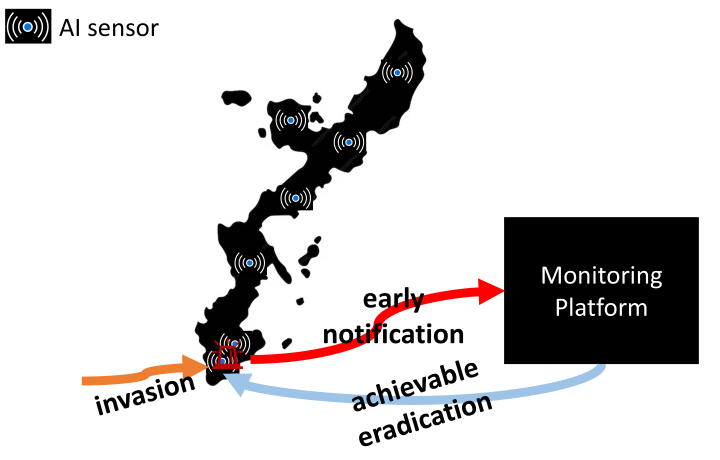
Figure 1. Our proposed system is composed of energy-efficient AI sensors that can detect the presence of invasive species in real-time, allowing for rapid responses from the local eradication teams.
Solution
We propose the development of an end-to-end system for real-time detection of alien invasive anuran species. This innovative solution centers on small, edge AI devices that perform classification of male mating calls in real time, transmitting their detections to a central monitoring web platform.
In the Seed Phase of the project, we will develop optimized neural network architectures that are able to conduct classification of recorded mating calls in real time, on energy-efficient hardware. Our proposed system will eliminate the delays associated with human field expeditions and will deliver actionable insights to policymakers and eradication teams in a timely manner. It will enable the scalable deployment of AI-based environmental monitoring sensors, minimize operational costs, and enhance privacy by processing acoustic data locally, at the edge.
The solution will support timely responses to biological invasions and will lay the foundation for a new model of AI-driven environmental monitoring.
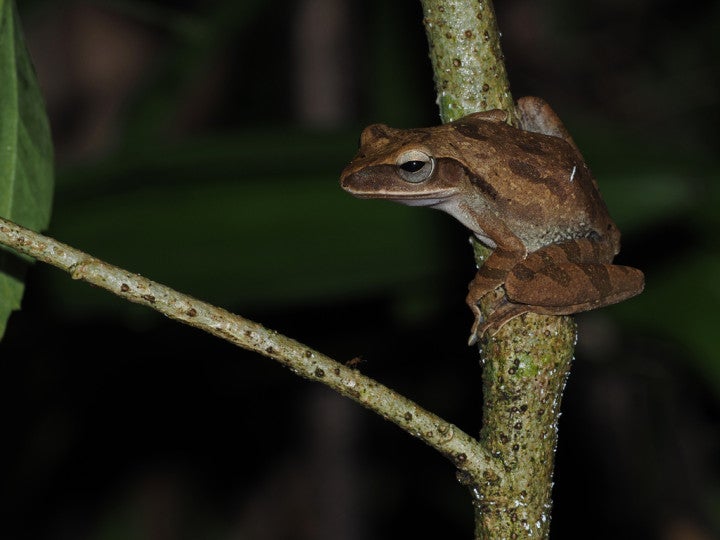
Figure 2. Polypedates leukomystax, one of Okinawa’s alien invasive species (source: iNaturalist).