
Problem
Meat production raises pressing environmental and ethical concerns. Intensive livestock farming contributes significantly to climate change through greenhouse gas emissions and deforestation. In addition, ethical challenges arise from cramped and stressful conditions in factory farms, as well as the use of antibiotics and hormones. Addressing these issues requires a reevaluation of dietary choices and promotion of sustainable farming practices.
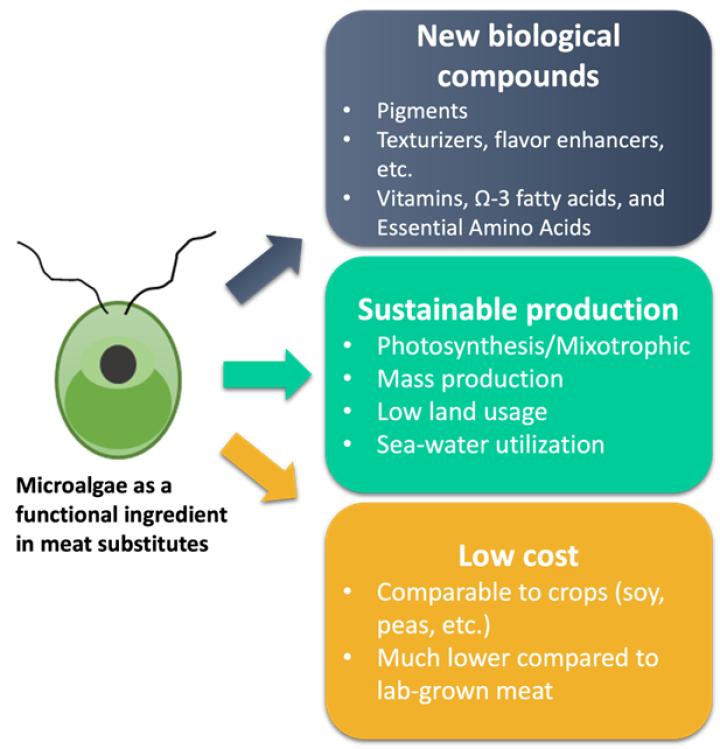
At present, the main commercialized meat alternatives are prepared using protein-rich legumes such as soybean, pea, and wheat. However, the extensive cultivation of protein-rich crops, poses environmental and ethical challenges due to soil degradation, utilization of pesticide, and deforestation. In addition, plant-based meat alternatives encounter low consumer acceptance because of poor sensory characteristics, and skepticism about nutritional value. Overcoming these barriers is crucial, as widespread adoption is pivotal for addressing environmental and ethical issues associated with traditional meat production.