中枢神経系の神経元に特異的な遺伝子導入を行うための新規ウイルスベクター
取り組んでいる課題
中枢神経系(CNS)疾患は、世界における身体障害の主な原因であり、多大な経済的負担をもたらしています。これらの疾患を治療するために設計された遺伝子治療は有望な解決策であり、現在、多くが臨床試験の段階にあります。しかしながら、臨床試験中のほぼすべての遺伝子治療製品は、遺伝子治療薬を届けるために侵襲的でリスクを伴う処置を必要とします。したがって、中枢神経系の神経細胞へ遺伝的負荷(カーゴ)を届けることができる、投与が容易で極めて特異性の高い遺伝子治療ベクターの確立が急務となっています。
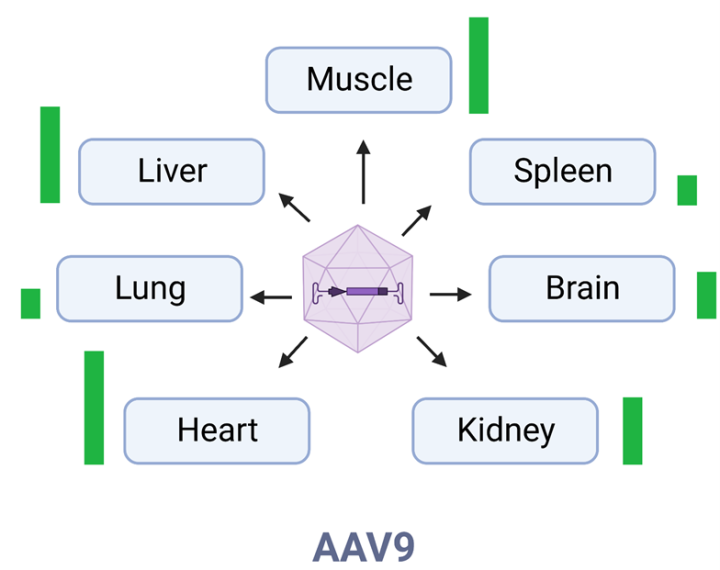
図1. 神経細胞への遺伝子カーゴの送達に用いられる一般的なAAV9ベクターは、強い免疫応答の引き起こしや高用量を必要とするといった、オフターゲット効果の課題を抱えています。
私たちの解決策
解決策は、遺伝子治療の負荷(カーゴ)を中枢神経系(CNS)の神経細胞にのみ特異的に送達する、新規のアデノ随伴ウイルス(AAV)ベクターを開発することです。
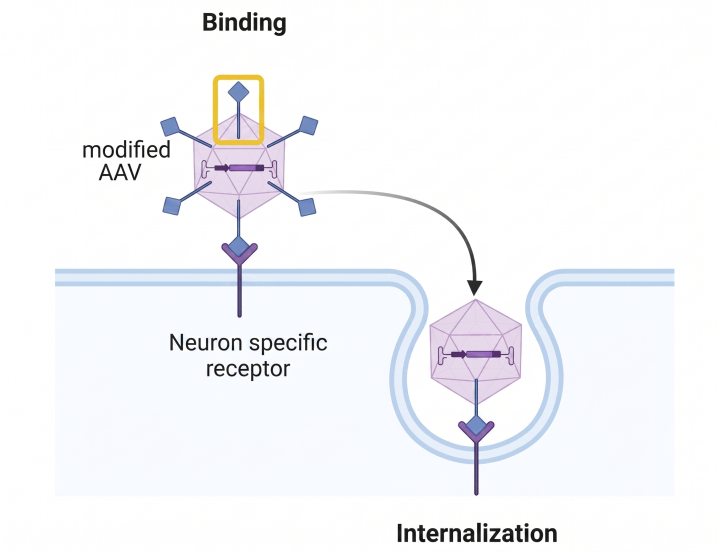
当プロジェクトは、血液脳関門を通過して中枢神経系へ遺伝子治療薬を届ける一定の能力を持つAAVの一種「AAV9」の改変ベクターの開発を目指しています。しかし、従来のAAV9は神経細胞を特異的に標的化することができず、心臓、肝臓、その他の臓器におけるオフターゲット発現を引き起こしてしまいます(図1)。そこで本プロジェクトでは、ウイルスの外殻であるAAV9のカプシドを、中枢神経系の神経細胞にのみ発現する受容体に特異的に結合する小さなペプチドで改変することで、遺伝子治療カーゴの特異的送達を劇的に向上させることを目指しています(図2)。これにより、既存のAAVベクターで懸念される肝毒性などのオフターゲット効果を軽減できます。さらに、全身投与(静脈内注射など)によるウイルスの投与が可能となり、侵襲的でリスクの高い局所注射手法を行う必要がなくなります。
図2. 当社の戦略は、AAV粒子を中枢神経系の神経細胞上に特異的に発現する受容体へ標的化し、遺伝子カーゴを送達することです。